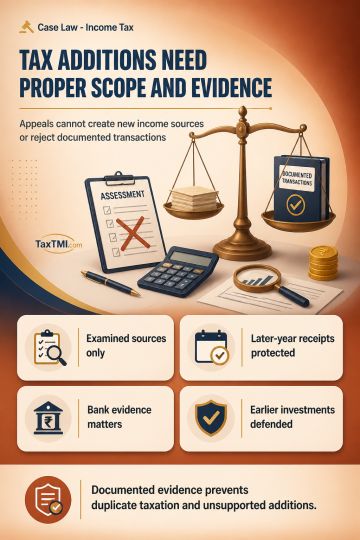
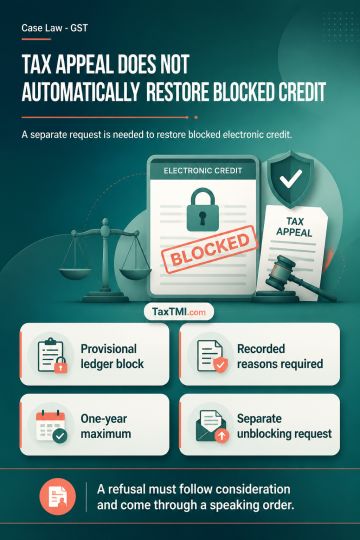
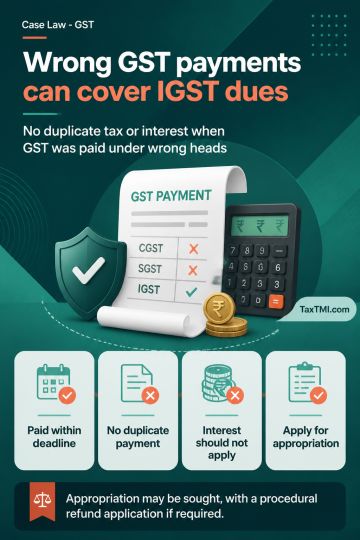
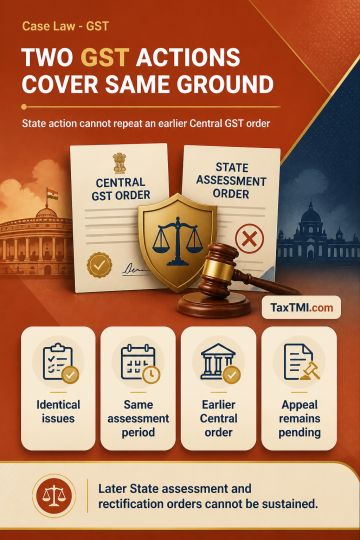
Appellate enhancement limits protect against new income sources, while documented credits and prior-year investments resist unexplained-income additio...
Capital-gains exemption for charitable trusts extends to qualifying fixed deposits, while unrecoverable TDS write-offs may constitute income applicati...
Page of 4868
Press 'Enter' after typing page number.
1 to 20 of 97344 Results
❮
❯
❯❯
0 / 200
Expand Note
Add to Folder
No Folders have been created
+
Are you sure you want to delete "My most important" ?
The Madras High Court addressed a case involving best judgment assessment due to the petitioner's failure to file GST returns within the prescribed time limit. The court noted that the limitation period for filing returns was extended to 120 days from 30 days, effective from 01.10.2023. However, traders prior to this period were not eligible for the extended timeframe. The petitioner argued that the actual tax liability was Rs. 2 lakhs, paid belatedly in August 2023, while the best judgment amount was Rs. 5 lakhs. The court allowed the petitioner to apply for condonation of delay, showing a sympathetic approach, and disposed of the writ petition accordingly.
The Madras High Court addressed a case involving best judgment assessment due to the petitioner's failure to file GST returns within the prescribed time limit. The court noted that the limitation period for filing returns was extended to 120 days from 30 days, effective from 01.10.2023. However, traders prior to this period were not eligible for the extended timeframe. The petitioner argued that the actual tax liability was Rs. 2 lakhs, paid belatedly in August 2023, while the best judgment amount was Rs. 5 lakhs. The court allowed the petitioner to apply for condonation of delay, showing a sympathetic approach, and disposed of the writ petition accordingly.
Note: It is a system-generated summary and is for quick reference only.
 TaxTMI
  TaxTMI