Authentication of paper assessment orders upheld, while qualifying repairs, consumables and vendor advance write-offs remain deductible business claim...
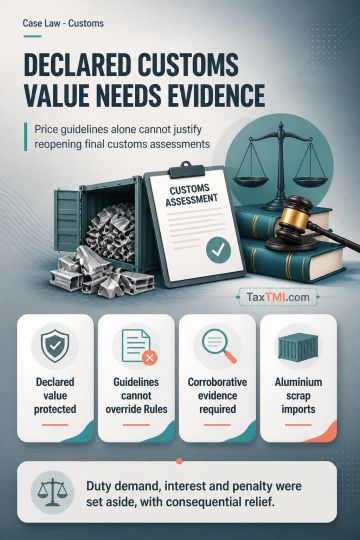
Transaction value cannot be rejected solely on non-statutory valuation guidelines without corroborative evidence supporting reassessment of final cust...
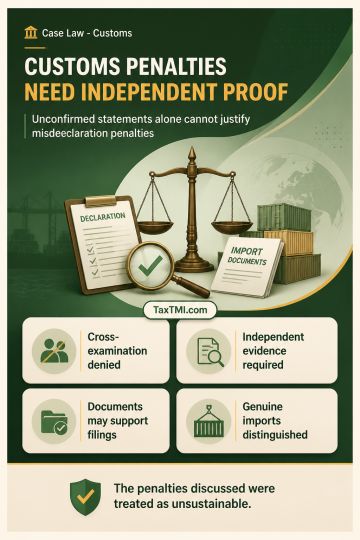
Cross-examination rights and corroborated evidence limit customs penalties for misdeclaration in genuine import transactions involving documented clea...
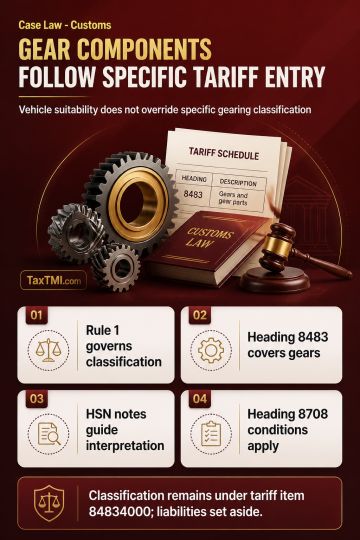
Tariff classification of vehicle gear components follows the specific gearing entry, displacing motor-vehicle parts classification and related liabili...
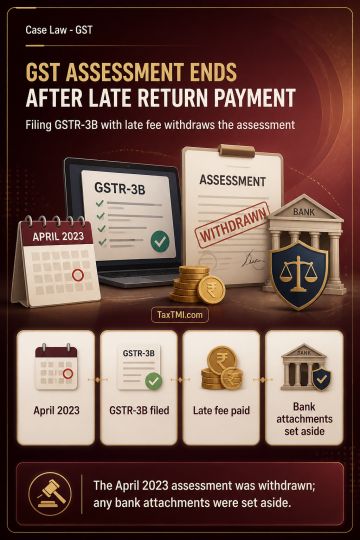
The Madras High Court addressed a case involving best judgment assessment due to the petitioner's failure to file GST returns within the prescribed time limit. The court noted that the limitation period for filing returns was extended to 120 days from 30 days, effective from 01.10.2023. However, traders prior to this period were not eligible for the extended timeframe. The petitioner argued that the actual tax liability was Rs. 2 lakhs, paid belatedly in August 2023, while the best judgment amount was Rs. 5 lakhs. The court allowed the petitioner to apply for condonation of delay, showing a sympathetic approach, and disposed of the writ petition accordingly.
The Madras High Court addressed a case involving best judgment assessment due to the petitioner's failure to file GST returns within the prescribed time limit. The court noted that the limitation period for filing returns was extended to 120 days from 30 days, effective from 01.10.2023. However, traders prior to this period were not eligible for the extended timeframe. The petitioner argued that the actual tax liability was Rs. 2 lakhs, paid belatedly in August 2023, while the best judgment amount was Rs. 5 lakhs. The court allowed the petitioner to apply for condonation of delay, showing a sympathetic approach, and disposed of the writ petition accordingly.
Note: It is a system-generated summary and is for quick reference only.
 TaxTMI
 of 4792











 Join Channel


 TaxTMI