Customs relief for Strait of Hormuz maritime disruptions remains available, with existing conditions continuing unchanged through the extended validit...
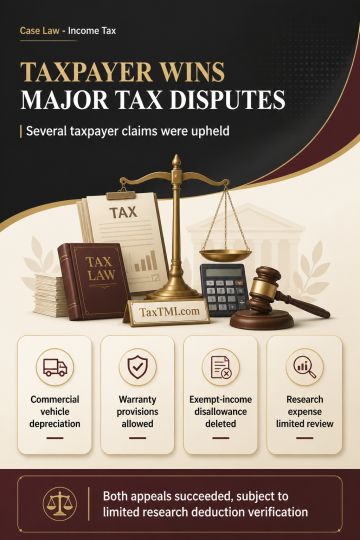
Commercial vehicle depreciation, scientifically determined warranty provisions and exempt-income disallowances were resolved in favour of the taxpayer...
Page of 4786
Press 'Enter' after typing page number.
121 to 140 of 95715 Results
❮
❯
❯❯
0 / 200
Expand Note
Add to Folder
No Folders have been created
+
Are you sure you want to delete "My most important" ?
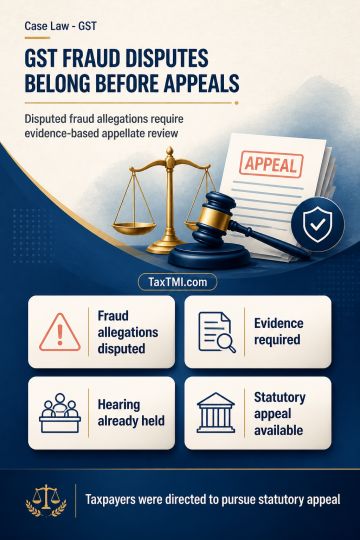
The Punjab and Haryana High Court dismissed the petition challenging the cancellation of GST registration of the petitioner company. The court found that the registration was not cancelled due to fraud, willful misrepresentation, or suppression of facts. The court noted that in cases of inter se disputes between directors, appropriate proceedings under Section 241 of the Companies Act could have been initiated. However, as no such action was taken in this case, the court could not presume a dispute between the directors. The court also stated that the cancellation of registration can only occur if the Registering Authority concludes that it was obtained through fraud or misrepresentation. Since the petitioner did not take any steps to prove such allegations, the court could not presume wrongdoing by the authorized director. The prayer for mandamus was denied, and the petition was dismissed.
The Punjab and Haryana High Court dismissed the petition challenging the cancellation of GST registration of the petitioner company. The court found that the registration was not cancelled due to fraud, willful misrepresentation, or suppression of facts. The court noted that in cases of inter se disputes between directors, appropriate proceedings under Section 241 of the Companies Act could have been initiated. However, as no such action was taken in this case, the court could not presume a dispute between the directors. The court also stated that the cancellation of registration can only occur if the Registering Authority concludes that it was obtained through fraud or misrepresentation. Since the petitioner did not take any steps to prove such allegations, the court could not presume wrongdoing by the authorized director. The prayer for mandamus was denied, and the petition was dismissed.
Note: It is a system-generated summary and is for quick reference only.
 TaxTMI
 of 4786











 Join Channel


 TaxTMI