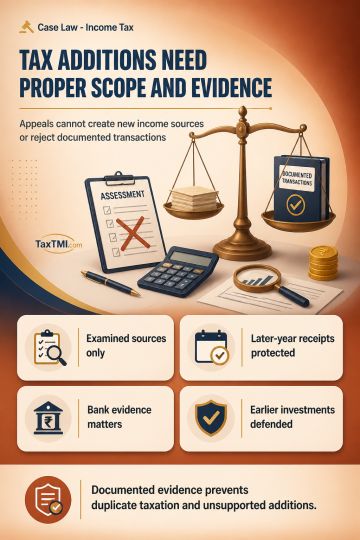
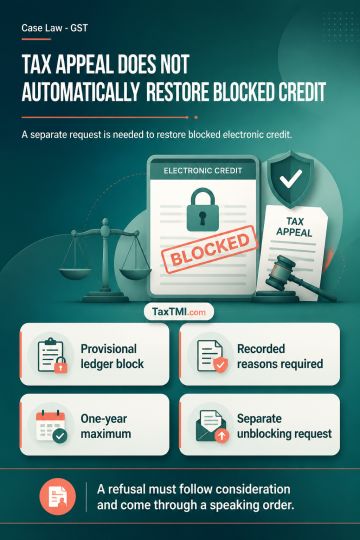
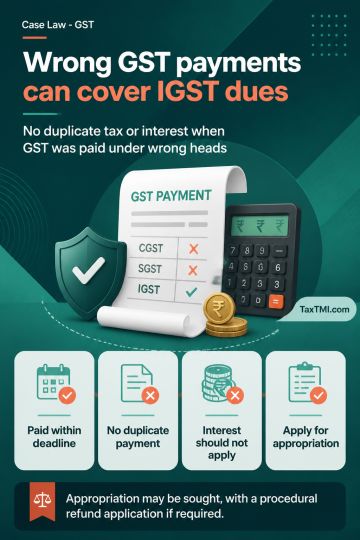
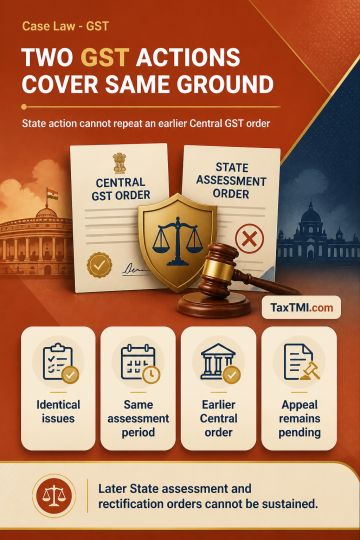
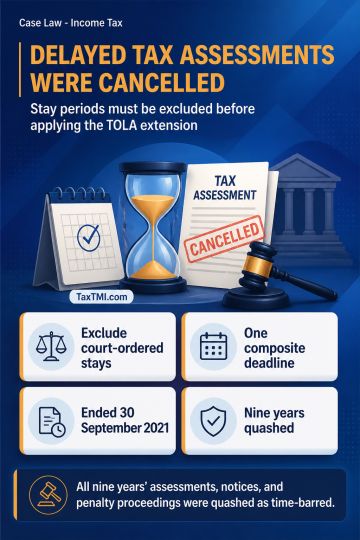
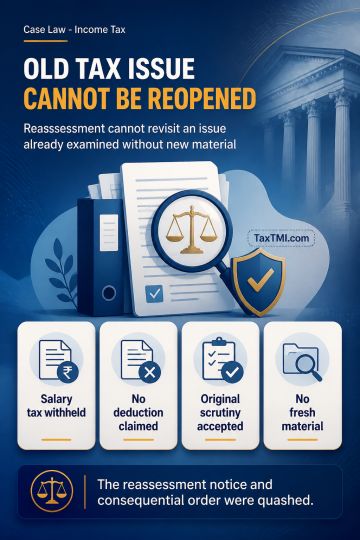
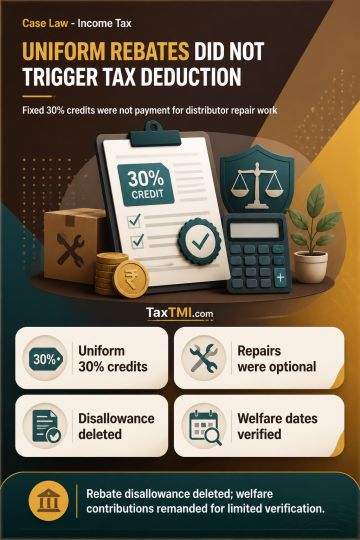
Appellate enhancement limits protect against new income sources, while documented credits and prior-year investments resist unexplained-income additio...
Capital-gains exemption for charitable trusts extends to qualifying fixed deposits, while unrecoverable TDS write-offs may constitute income applicati...
Page of 4868
Press 'Enter' after typing page number.
1 to 20 of 97344 Results
❮
❯
❯❯
0 / 200
Expand Note
Add to Folder
No Folders have been created
+
Are you sure you want to delete "My most important" ?
The Punjab and Haryana High Court dismissed the petition challenging the cancellation of GST registration of the petitioner company. The court found that the registration was not cancelled due to fraud, willful misrepresentation, or suppression of facts. The court noted that in cases of inter se disputes between directors, appropriate proceedings under Section 241 of the Companies Act could have been initiated. However, as no such action was taken in this case, the court could not presume a dispute between the directors. The court also stated that the cancellation of registration can only occur if the Registering Authority concludes that it was obtained through fraud or misrepresentation. Since the petitioner did not take any steps to prove such allegations, the court could not presume wrongdoing by the authorized director. The prayer for mandamus was denied, and the petition was dismissed.
The Punjab and Haryana High Court dismissed the petition challenging the cancellation of GST registration of the petitioner company. The court found that the registration was not cancelled due to fraud, willful misrepresentation, or suppression of facts. The court noted that in cases of inter se disputes between directors, appropriate proceedings under Section 241 of the Companies Act could have been initiated. However, as no such action was taken in this case, the court could not presume a dispute between the directors. The court also stated that the cancellation of registration can only occur if the Registering Authority concludes that it was obtained through fraud or misrepresentation. Since the petitioner did not take any steps to prove such allegations, the court could not presume wrongdoing by the authorized director. The prayer for mandamus was denied, and the petition was dismissed.
Note: It is a system-generated summary and is for quick reference only.
 TaxTMI
  TaxTMI