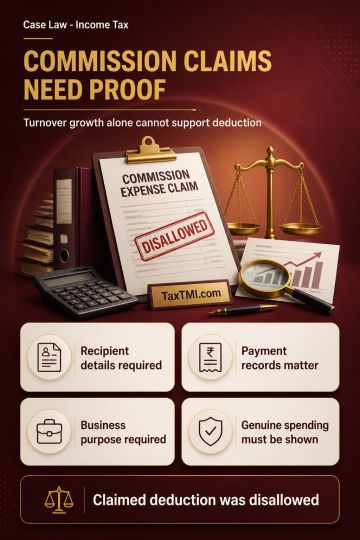
Business expenditure deduction requires proof of genuine commission payments and commercial allowability; turnover growth alone cannot validate the cl...
Article 8 treaty coverage excluded third-party airline support services, while documented demonetisation cash receipts remained accepted business inco...
Functional comparability under TNMM requires highway contract benchmarks to reflect operation, maintenance and transfer activities, requiring fresh be...
The Punjab and Haryana High Court dismissed the petition challenging the cancellation of GST registration of the petitioner company. The court found that the registration was not cancelled due to fraud, willful misrepresentation, or suppression of facts. The court noted that in cases of inter se disputes between directors, appropriate proceedings under Section 241 of the Companies Act could have been initiated. However, as no such action was taken in this case, the court could not presume a dispute between the directors. The court also stated that the cancellation of registration can only occur if the Registering Authority concludes that it was obtained through fraud or misrepresentation. Since the petitioner did not take any steps to prove such allegations, the court could not presume wrongdoing by the authorized director. The prayer for mandamus was denied, and the petition was dismissed.
The Punjab and Haryana High Court dismissed the petition challenging the cancellation of GST registration of the petitioner company. The court found that the registration was not cancelled due to fraud, willful misrepresentation, or suppression of facts. The court noted that in cases of inter se disputes between directors, appropriate proceedings under Section 241 of the Companies Act could have been initiated. However, as no such action was taken in this case, the court could not presume a dispute between the directors. The court also stated that the cancellation of registration can only occur if the Registering Authority concludes that it was obtained through fraud or misrepresentation. Since the petitioner did not take any steps to prove such allegations, the court could not presume wrongdoing by the authorized director. The prayer for mandamus was denied, and the petition was dismissed.
Note: It is a system-generated summary and is for quick reference only.
 TaxTMI
 of 4790














 Join Channel


 TaxTMI
