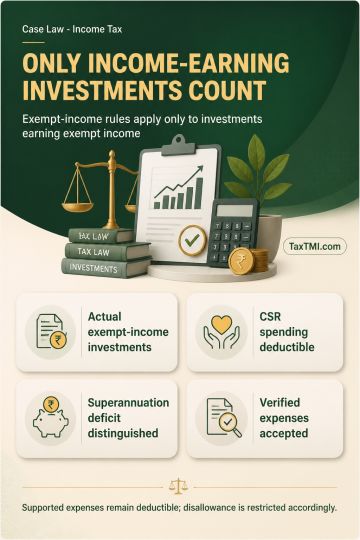
Exempt-income expenditure disallowance is confined to investments that actually generated exempt income, while supported business expenses remain dedu...
Objective characteristics and principal use govern mining-tyre classification, while fresh advance ruling applications may rely on additional technica...
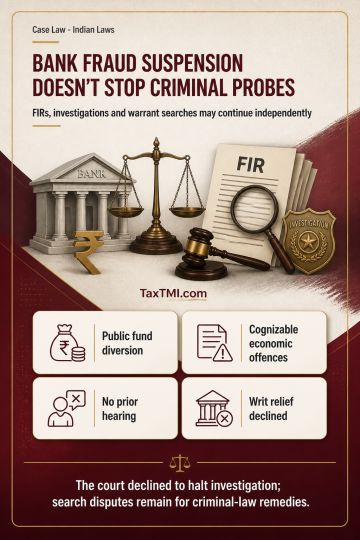
Administrative fraud classification suspension does not halt independent criminal investigation or warrant-based searches into alleged economic offenc...
The legality and validity of the termination of arbitral proceedings u/s 32(2)(c) of the Arbitration and Conciliation Act, 1996 - The Supreme Court found no evidence of Sheil's abandonment of the claim. Regular participation in Marico's proceedings and absence of simultaneous scheduling were noted. - The Tribunal's duty to schedule hearings and manage proceedings was highlighted, and the mere absence of a party from a hearing does not imply abandonment or justify termination of proceedings. - The Supreme Court upheld the High Court's decision, reinstating the arbitration proceedings and emphasizing the need for an active role by the Arbitral Tribunal in managing the process.
The legality and validity of the termination of arbitral proceedings u/s 32(2)(c) of the Arbitration and Conciliation Act, 1996 - The Supreme Court found no evidence of Sheil's abandonment of the claim. Regular participation in Marico's proceedings and absence of simultaneous scheduling were noted. - The Tribunal's duty to schedule hearings and manage proceedings was highlighted, and the mere absence of a party from a hearing does not imply abandonment or justify termination of proceedings. - The Supreme Court upheld the High Court's decision, reinstating the arbitration proceedings and emphasizing the need for an active role by the Arbitral Tribunal in managing the process.
Note: It is a system-generated summary and is for quick reference only.
 TaxTMI
 of 4805













 Join Channel


 TaxTMI