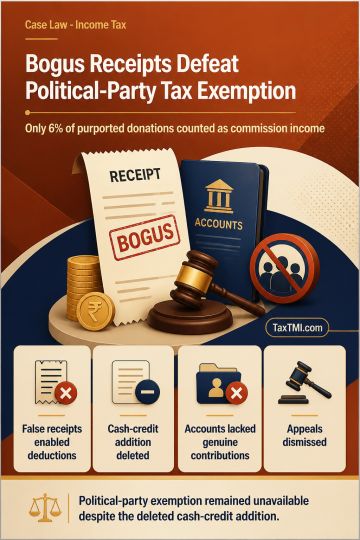
Bogus donation receipts justified commission income assessment and defeated political-party tax exemption for inaccurate accounts and reporting failur...
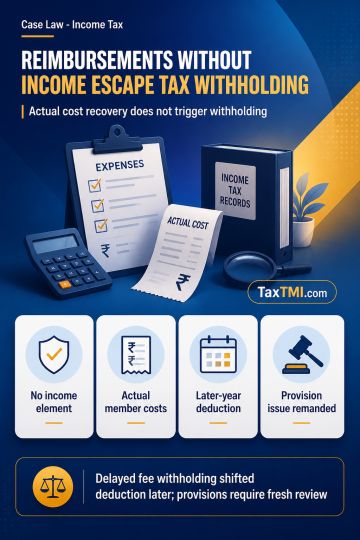
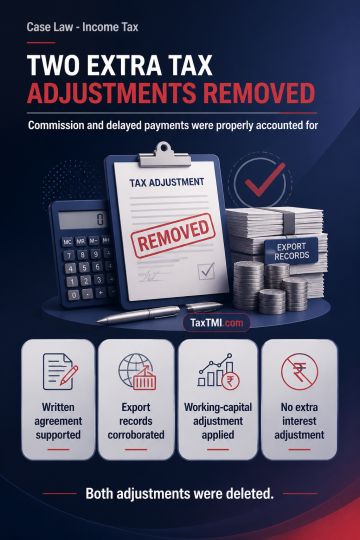
Pure reimbursement without income element escapes tax withholding, while delayed withholding and unsupported provisions face deferred or renewed scrut...
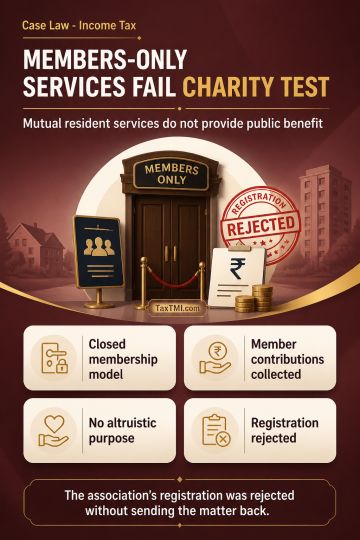
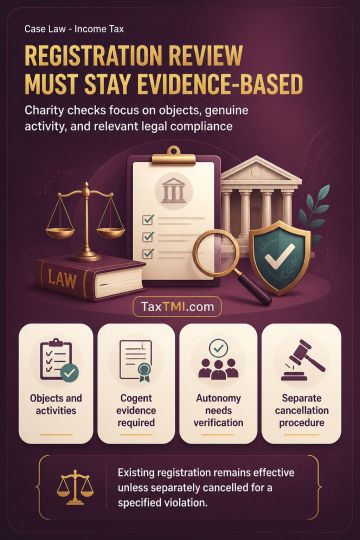
Public benefit requirement defeats charitable registration where residents' association services are reciprocal, member-only facilities governed by mu...
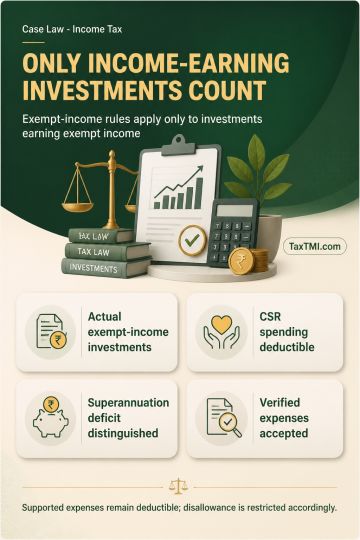
Exempt-income expenditure disallowance is confined to investments that actually generated exempt income, while supported business expenses remain dedu...
Objective characteristics and principal use govern mining-tyre classification, while fresh advance ruling applications may rely on additional technica...
Page of 4788
Press 'Enter' after typing page number.
461 to 480 of 95752 Results
❮
❯
❯❯
0 / 200
Expand Note
Add to Folder
No Folders have been created
+
Are you sure you want to delete "My most important" ?
Liquidation of corporate Debtor - Eligibility of the Appellant to submit the Resolution Plan under section 29 A of IBC - The tribunal upheld the declaration that the appellant was a wilful defaulter, making him ineligible under Section 29A of the IBC to submit a resolution plan. This was a significant factor in the rejection of his resolution plan and the subsequent decision to liquidate. - The tribunal highlighted the autonomy of the CoC's commercial wisdom in deciding not to approve the resolution plan submitted by the appellant. It noted that such decisions are beyond the scope of judicial review. - The tribunal noted that any ad-interim relief obtained by the appellant against his wilful defaulter status did not override the CoC's decision-making power, as the stay was conditional and temporary.
Liquidation of corporate Debtor - Eligibility of the Appellant to submit the Resolution Plan under section 29 A of IBC - The tribunal upheld the declaration that the appellant was a wilful defaulter, making him ineligible under Section 29A of the IBC to submit a resolution plan. This was a significant factor in the rejection of his resolution plan and the subsequent decision to liquidate. - The tribunal highlighted the autonomy of the CoC's commercial wisdom in deciding not to approve the resolution plan submitted by the appellant. It noted that such decisions are beyond the scope of judicial review. - The tribunal noted that any ad-interim relief obtained by the appellant against his wilful defaulter status did not override the CoC's decision-making power, as the stay was conditional and temporary.
Note: It is a system-generated summary and is for quick reference only.
 TaxTMI
 of 4788



 Join Channel


 TaxTMI