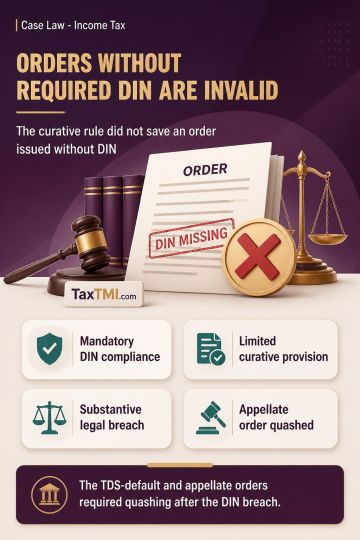
Document Identification Number compliance renders TDS-default orders invalid where mandatory DIN requirements are breached and curative provision does...
Penalty proceedings u/s 270A - Applicable rate of penalty - The Appellate Tribunal noted that while the penalty notice cited under-reporting of income, the AO imposed the penalty under the provision related to misreporting of income. The Tribunal found that the AO's action of invoking the higher penalty rate for misreporting was not justified. It was established that the penalty for under-reporting and misreporting of income carried different rates under Section 270A of the Act. Therefore, the Tribunal concluded that the penalty should have been restricted to the rate applicable for under-reporting of income, which is 50%.
Penalty proceedings u/s 270A - Applicable rate of penalty - The Appellate Tribunal noted that while the penalty notice cited under-reporting of income, the AO imposed the penalty under the provision related to misreporting of income. The Tribunal found that the AO's action of invoking the higher penalty rate for misreporting was not justified. It was established that the penalty for under-reporting and misreporting of income carried different rates under Section 270A of the Act. Therefore, the Tribunal concluded that the penalty should have been restricted to the rate applicable for under-reporting of income, which is 50%.
Note: It is a system-generated summary and is for quick reference only.
 TaxTMI
  TaxTMI
 of 4918