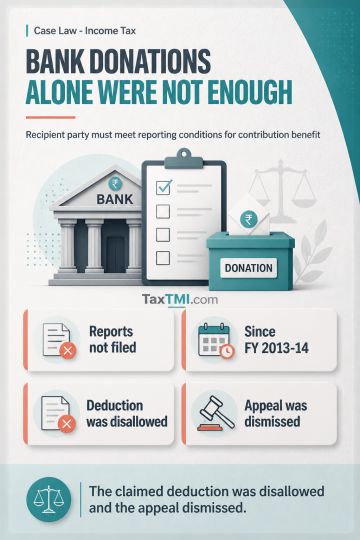
Political contribution deductions require recipient party compliance with contribution-reporting conditions; banking-channel donations alone do not qu...
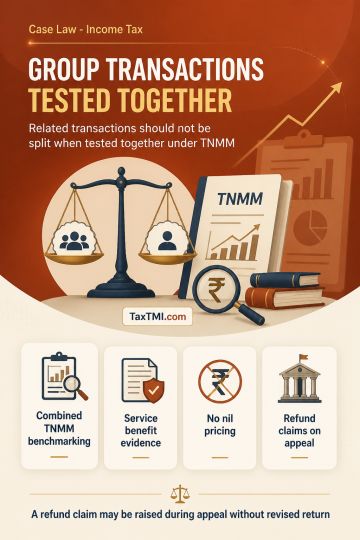
Aggregation under TNMM prevents selective testing of intra-group services without comparable uncontrolled transactions, while appellate additional cla...
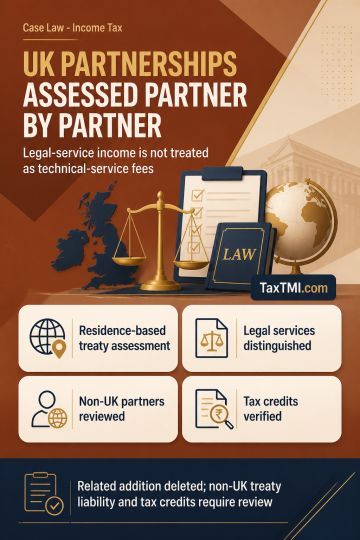
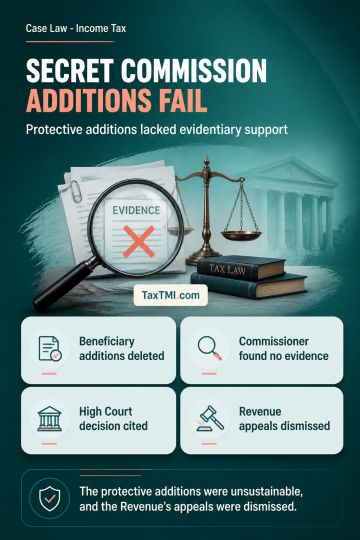
Protective assessment cannot duplicate identical receipts under competing characterisations; remote services did not establish a taxable permanent est...
Current account treatment of overseas tournament services removed most FEMA findings, but excess EEFC remittance and delayed repatriation remained bre...
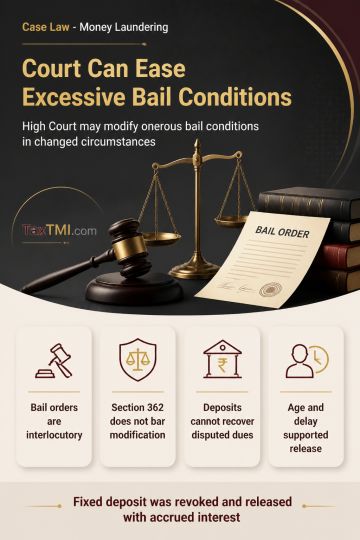
Modification of bail conditions remains available through inherent jurisdiction where onerous deposits undermine justice and cannot recover disputed d...
Merchant banker regulation consolidates registration, governance, capital, reporting, outsourcing and investor-protection requirements under an update...
Approval of scheme of amalgamation - Application of the "Alter Ego" Principle - Violation of Section 233 of the Companies Act, 2013 - requirement of holding at least ninety percent of the total numbers of shares - The complainant (opposite party) argued that the petitioner made a false declaration regarding the approval of the amalgamation scheme, misleading the authorities by stating that the scheme was approved by the requisite majority of members, which did not constitute 90% of total members but rather those present and voting. - The High Court hold that by targeting the petitioner (the Company Secretary) alone, without implicating the corporation or other responsible individuals, the prosecution is deemed to be fundamentally flawed and an abuse of the legal process. The petitioner, acting in his official capacity, should not bear sole responsibility for corporate actions unless specific wrongdoing on his part can be demonstrated.
Approval of scheme of amalgamation - Application of the "Alter Ego" Principle - Violation of Section 233 of the Companies Act, 2013 - requirement of holding at least ninety percent of the total numbers of shares - The complainant (opposite party) argued that the petitioner made a false declaration regarding the approval of the amalgamation scheme, misleading the authorities by stating that the scheme was approved by the requisite majority of members, which did not constitute 90% of total members but rather those present and voting. - The High Court hold that by targeting the petitioner (the Company Secretary) alone, without implicating the corporation or other responsible individuals, the prosecution is deemed to be fundamentally flawed and an abuse of the legal process. The petitioner, acting in his official capacity, should not bear sole responsibility for corporate actions unless specific wrongdoing on his part can be demonstrated.
Note: It is a system-generated summary and is for quick reference only.
 TaxTMI
 of 4782















 Join Channel


 TaxTMI