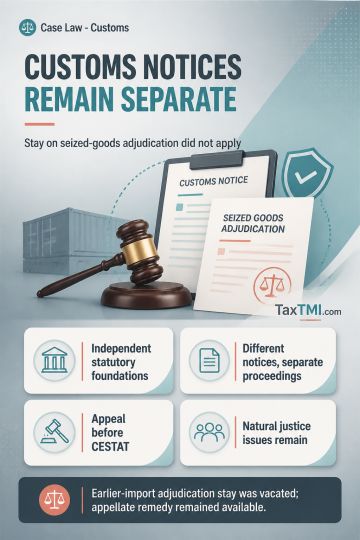
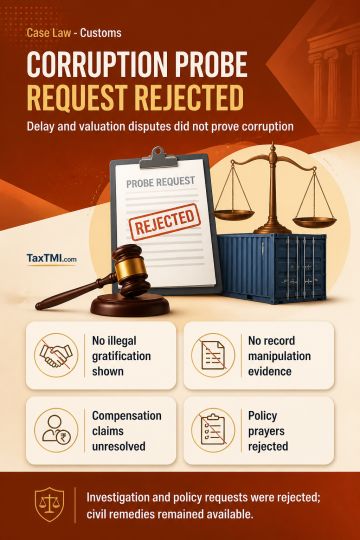
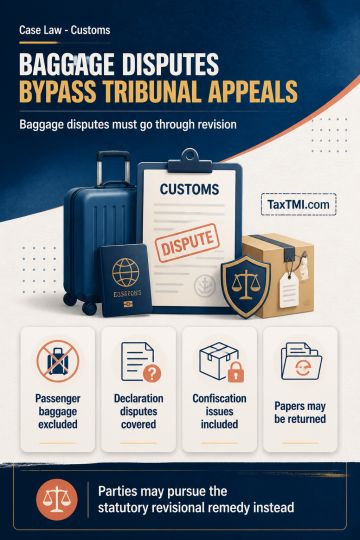
Independent show-cause notices remain separate proceedings, while customs adjudication challenges should ordinarily follow the statutory appellate rem...
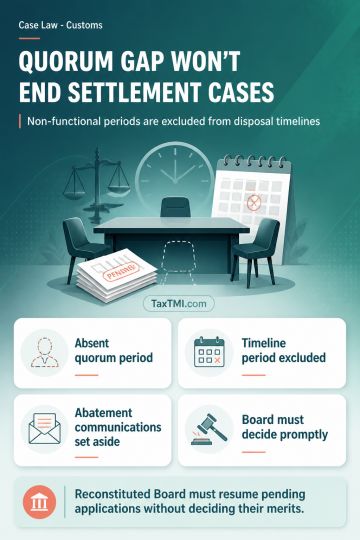
Institutional incapacity in customs settlement proceedings excludes non-functional quorum periods from statutory disposal timelines, preventing automa...
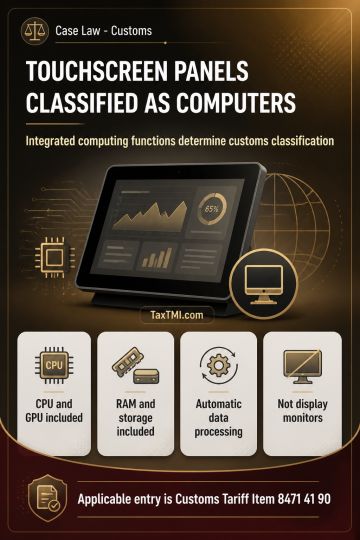
Interactive touchscreen panels with integrated computing functions fall under automatic data-processing machines rather than display monitors for cust...
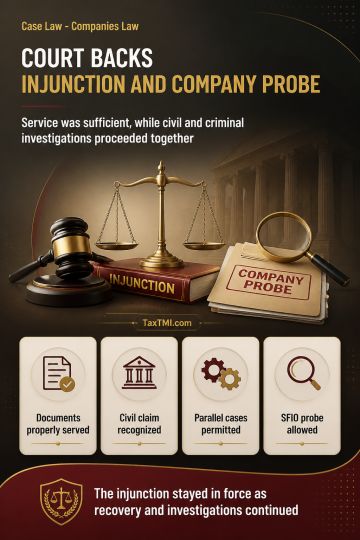
Ex parte injunction service requirements were substantially met, while civil recovery and SFIO investigation into provident fund defalcation continued...
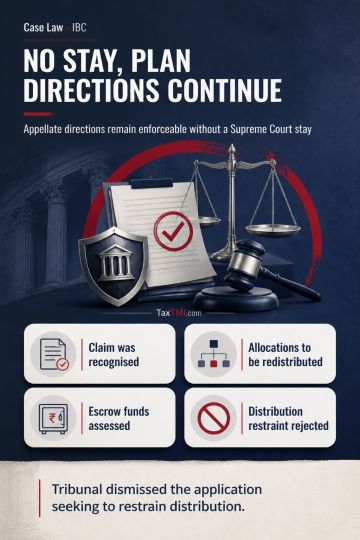
Enforcement of resolution-plan directions continues without a Supreme Court stay, preventing suspension of redistribution and escrowed-fund distributi...
Third-party ownership claims over attached property require Special Court adjudication where purchasers lack registered sale deeds and bona fides rema...
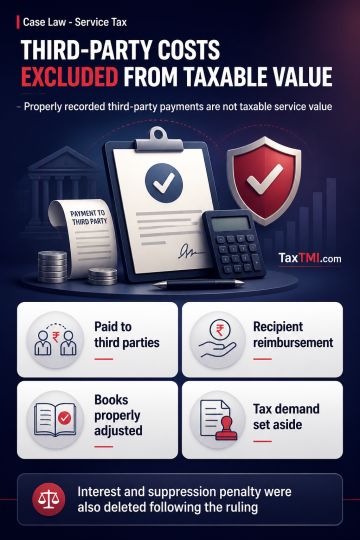
Pure-agent reimbursements in clearing and forwarding services are excluded from taxable value when qualifying third-party payments are properly record...
Amendment in the bills of entry u/s 149 of the Customs Act, 1962 (CA ’62) - refund of excess duty paid - Re-classifying the goods by changing the CTH - The Tribunal noted that the Assistant Commissioner’s rejection letter was ambiguous and lacked substantive reasoning, which the Commissioner (Appeals) failed to rectify. It emphasized the need for a proper order, following principles of natural justice. - The Tribunal disagreed with the lower authorities' interpretation that amendments under Section 149 are impermissible post-clearance for changes impacting duty assessment. It pointed to higher judicial rulings that allowed such amendments where documentary evidence existed. - Consequently, the Tribunal set aside the previous order and remanded the case back for reassessment under the correct CTH.
Amendment in the bills of entry u/s 149 of the Customs Act, 1962 (CA ’62) - refund of excess duty paid - Re-classifying the goods by changing the CTH - The Tribunal noted that the Assistant Commissioner’s rejection letter was ambiguous and lacked substantive reasoning, which the Commissioner (Appeals) failed to rectify. It emphasized the need for a proper order, following principles of natural justice. - The Tribunal disagreed with the lower authorities' interpretation that amendments under Section 149 are impermissible post-clearance for changes impacting duty assessment. It pointed to higher judicial rulings that allowed such amendments where documentary evidence existed. - Consequently, the Tribunal set aside the previous order and remanded the case back for reassessment under the correct CTH.
Note: It is a system-generated summary and is for quick reference only.
 TaxTMI
  TaxTMI
 of 4828





 Join Channel


