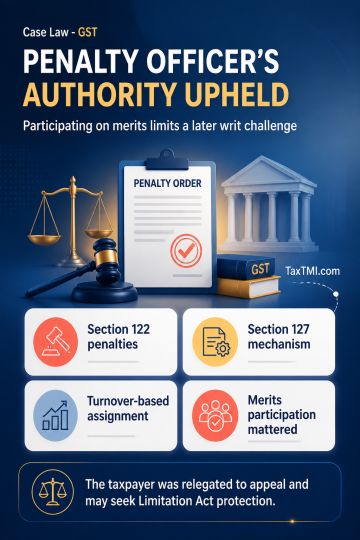
Proper-officer jurisdiction under UPGST penalty provisions upheld; participation on merits prevents bypassing the statutory appellate remedy through w...
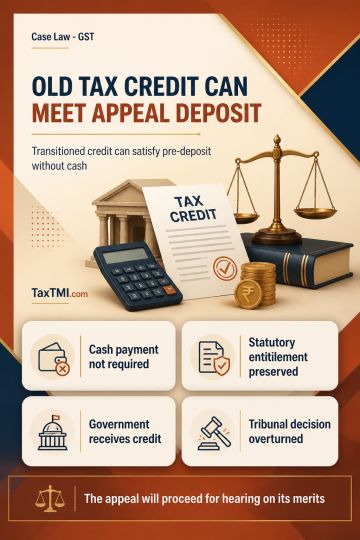
Transitioned CENVAT credit may validly satisfy mandatory pre-deposit requirements for legacy service tax appeals through Electronic Credit Ledger debi...
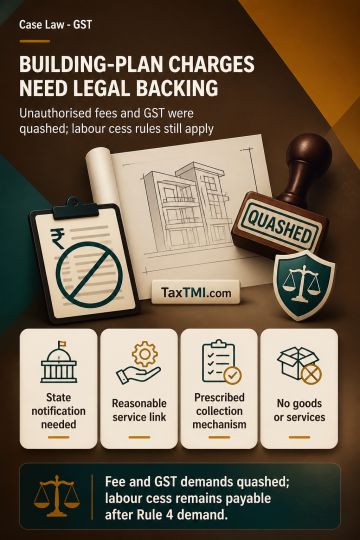
Building-plan sanction charges require statutory authority; unauthorised fees and GST were quashed, while labour cess must follow prescribed collectio...
Pure-agent exclusion fails where hotel booking facilitators receive third-party services themselves, making entire customer consideration taxable as r...
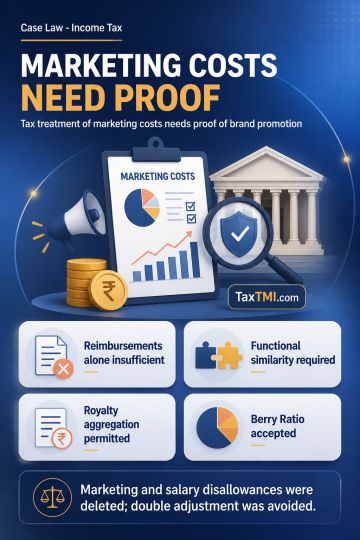
Transfer pricing requires evidence for AMP transactions, functionally reliable comparables, and appropriate aggregation or Berry Ratio benchmarking me...
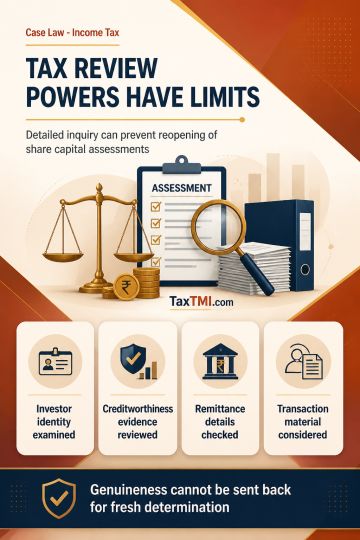
Revisionary jurisdiction cannot reopen share capital assessments where adequate inquiry supports a permissible view and no independent error is establ...
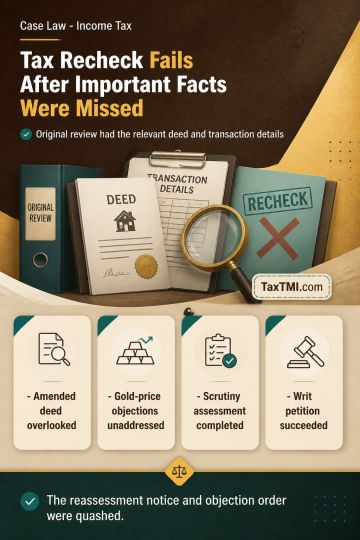
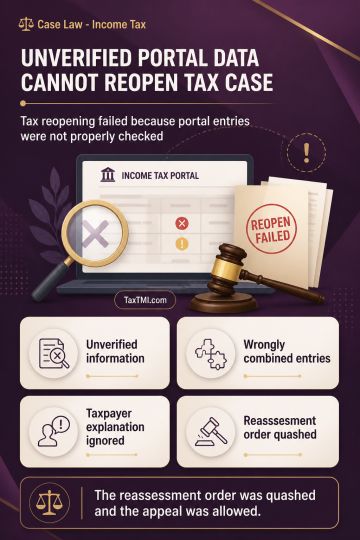
Reassessment jurisdiction fails where unverified portal information is aggregated without examining the taxpayer's explanation or relevance of entries...
Amendment in the bills of entry u/s 149 of the Customs Act, 1962 (CA ’62) - refund of excess duty paid - Re-classifying the goods by changing the CTH - The Tribunal noted that the Assistant Commissioner’s rejection letter was ambiguous and lacked substantive reasoning, which the Commissioner (Appeals) failed to rectify. It emphasized the need for a proper order, following principles of natural justice. - The Tribunal disagreed with the lower authorities' interpretation that amendments under Section 149 are impermissible post-clearance for changes impacting duty assessment. It pointed to higher judicial rulings that allowed such amendments where documentary evidence existed. - Consequently, the Tribunal set aside the previous order and remanded the case back for reassessment under the correct CTH.
Amendment in the bills of entry u/s 149 of the Customs Act, 1962 (CA ’62) - refund of excess duty paid - Re-classifying the goods by changing the CTH - The Tribunal noted that the Assistant Commissioner’s rejection letter was ambiguous and lacked substantive reasoning, which the Commissioner (Appeals) failed to rectify. It emphasized the need for a proper order, following principles of natural justice. - The Tribunal disagreed with the lower authorities' interpretation that amendments under Section 149 are impermissible post-clearance for changes impacting duty assessment. It pointed to higher judicial rulings that allowed such amendments where documentary evidence existed. - Consequently, the Tribunal set aside the previous order and remanded the case back for reassessment under the correct CTH.
Note: It is a system-generated summary and is for quick reference only.
 TaxTMI
  TaxTMI
 of 4826







 Join Channel


