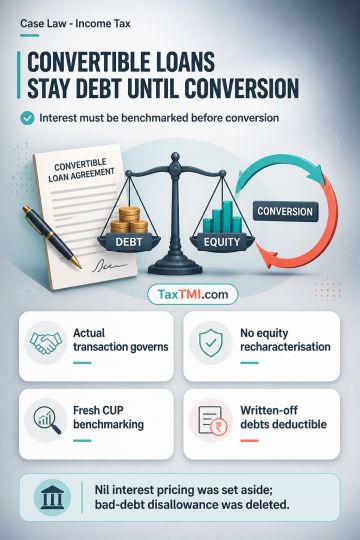
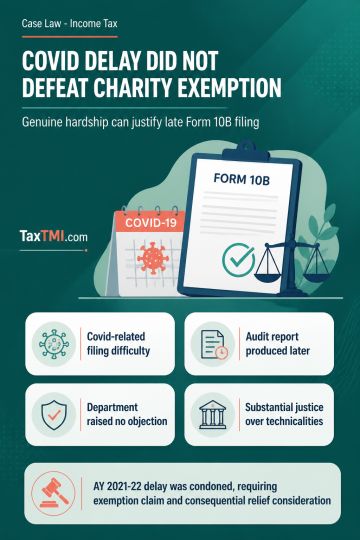
Belated Form 10B filing during Covid-19 cannot defeat charitable exemption where genuine hardship warrants condonation and substantial justice prevail...
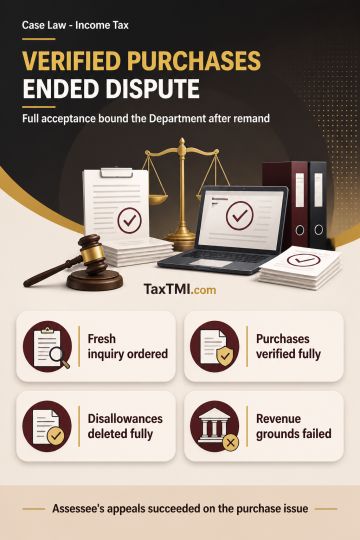
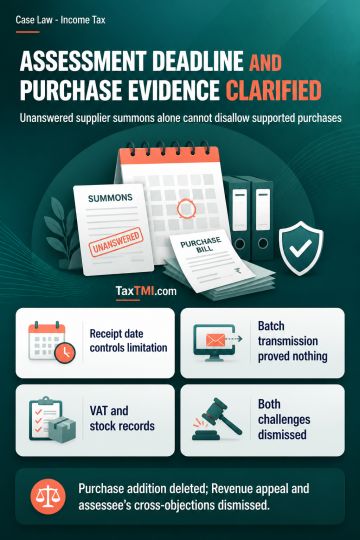
Limitation for consequential assessments runs from prescribed authority receipt, while verified purchases cannot be disallowed merely for unanswered s...
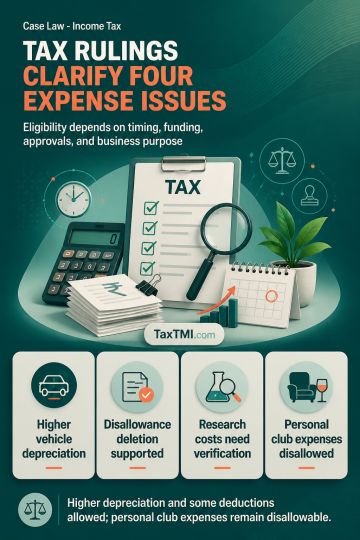
Higher depreciation for qualifying commercial vehicles, exempt-income disallowance, research deduction verification, and club-expense treatment clarif...
Charitable registration renewal cannot become an assessment of receipts, profitability or annual exemption compliance, requiring renewal and donation ...
AMP expenditure for own business is not an international transaction without an associated-enterprise arrangement, eliminating transfer pricing adjust...
Amendment in the bills of entry u/s 149 of the Customs Act, 1962 (CA ’62) - refund of excess duty paid - Re-classifying the goods by changing the CTH - The Tribunal noted that the Assistant Commissioner’s rejection letter was ambiguous and lacked substantive reasoning, which the Commissioner (Appeals) failed to rectify. It emphasized the need for a proper order, following principles of natural justice. - The Tribunal disagreed with the lower authorities' interpretation that amendments under Section 149 are impermissible post-clearance for changes impacting duty assessment. It pointed to higher judicial rulings that allowed such amendments where documentary evidence existed. - Consequently, the Tribunal set aside the previous order and remanded the case back for reassessment under the correct CTH.
Amendment in the bills of entry u/s 149 of the Customs Act, 1962 (CA ’62) - refund of excess duty paid - Re-classifying the goods by changing the CTH - The Tribunal noted that the Assistant Commissioner’s rejection letter was ambiguous and lacked substantive reasoning, which the Commissioner (Appeals) failed to rectify. It emphasized the need for a proper order, following principles of natural justice. - The Tribunal disagreed with the lower authorities' interpretation that amendments under Section 149 are impermissible post-clearance for changes impacting duty assessment. It pointed to higher judicial rulings that allowed such amendments where documentary evidence existed. - Consequently, the Tribunal set aside the previous order and remanded the case back for reassessment under the correct CTH.
Note: It is a system-generated summary and is for quick reference only.
 TaxTMI
  TaxTMI
 of 4823






 Join Channel