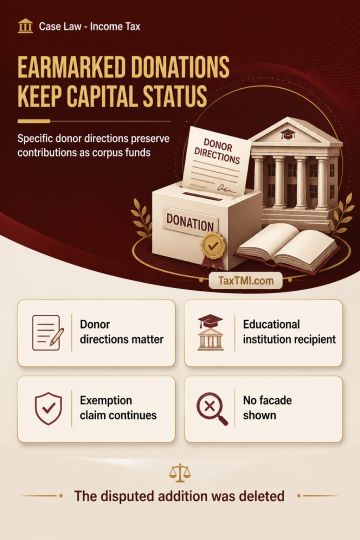
Donor-directed corpus contributions retain capital character despite exemption claims under section 10(23C)(vi), preventing their treatment as taxable...
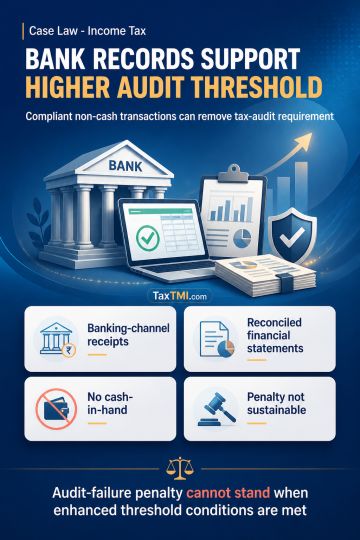
Enhanced tax-audit threshold applies where banking records establish compliant non-cash receipts and payments, eliminating penalty exposure for audit ...
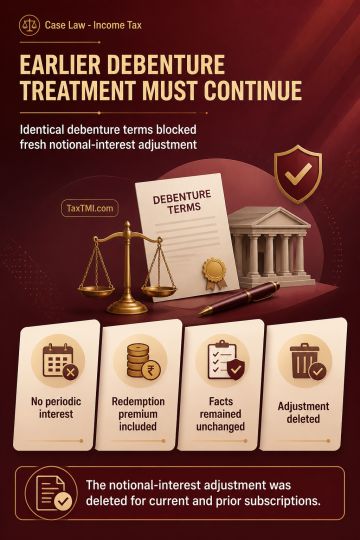
Transfer pricing consistency protects identical non-interest-bearing debenture terms from a later notional-interest adjustment without valid statutory...
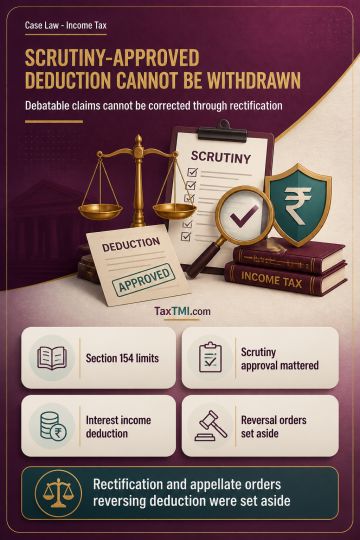
Rectification of debatable deduction claims cannot reverse scrutiny-approved co-operative society interest income deductions as apparent record errors...
Cash-method accounting bars presumptive interest taxation, while unsupported securities and share-trading additions require reliable material and veri...
Amendment in the bills of entry u/s 149 of the Customs Act, 1962 (CA ’62) - refund of excess duty paid - Re-classifying the goods by changing the CTH - The Tribunal noted that the Assistant Commissioner’s rejection letter was ambiguous and lacked substantive reasoning, which the Commissioner (Appeals) failed to rectify. It emphasized the need for a proper order, following principles of natural justice. - The Tribunal disagreed with the lower authorities' interpretation that amendments under Section 149 are impermissible post-clearance for changes impacting duty assessment. It pointed to higher judicial rulings that allowed such amendments where documentary evidence existed. - Consequently, the Tribunal set aside the previous order and remanded the case back for reassessment under the correct CTH.
Amendment in the bills of entry u/s 149 of the Customs Act, 1962 (CA ’62) - refund of excess duty paid - Re-classifying the goods by changing the CTH - The Tribunal noted that the Assistant Commissioner’s rejection letter was ambiguous and lacked substantive reasoning, which the Commissioner (Appeals) failed to rectify. It emphasized the need for a proper order, following principles of natural justice. - The Tribunal disagreed with the lower authorities' interpretation that amendments under Section 149 are impermissible post-clearance for changes impacting duty assessment. It pointed to higher judicial rulings that allowed such amendments where documentary evidence existed. - Consequently, the Tribunal set aside the previous order and remanded the case back for reassessment under the correct CTH.
Note: It is a system-generated summary and is for quick reference only.
 TaxTMI
  TaxTMI
 of 4823










 Join Channel