Tax exemption for regulatory authority income applies retrospectively, subject to non-commercial activity, unchanged income sources, and return filing...
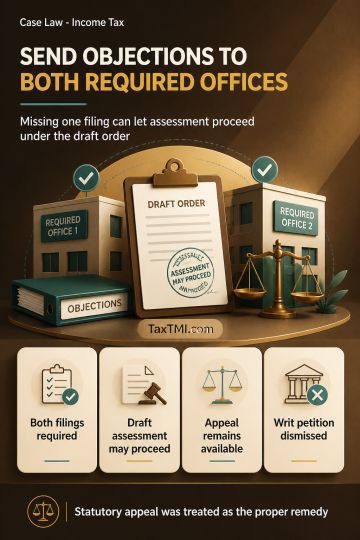
Dispute Resolution Panel objections must reach both prescribed forums; otherwise assessment may proceed and statutory appeal remains the proper remedy...
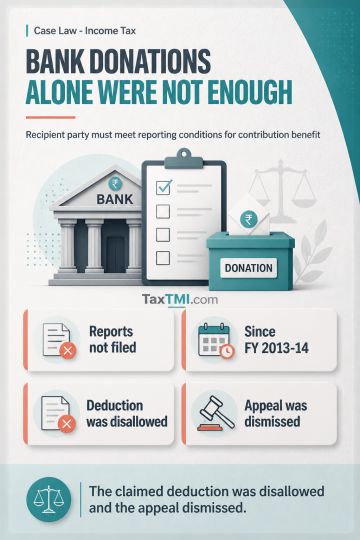
Political contribution deductions require recipient party compliance with contribution-reporting conditions; banking-channel donations alone do not qu...
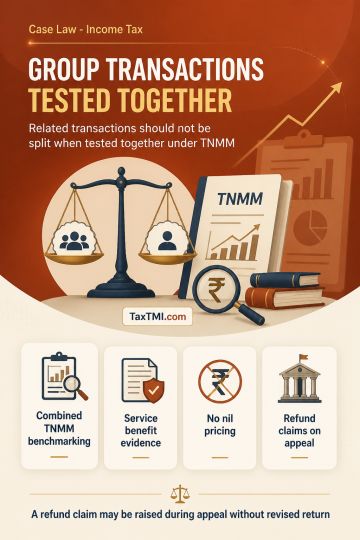
Aggregation under TNMM prevents selective testing of intra-group services without comparable uncontrolled transactions, while appellate additional cla...
Page of 4790
Press 'Enter' after typing page number.
421 to 440 of 95794 Results
❮
❯
❯❯
0 / 200
Expand Note
Add to Folder
No Folders have been created
+
Are you sure you want to delete "My most important" ?
Validity of Revision u/s 263 - An order which is prejudicial to revenue even if no Tax Loss - The High Court found that the AO's assessment did not adequately address the genuineness and creditworthiness of the loan transactions from certain entities, identified in a DDIT investigation report as shell companies operated by an entry operator. This oversight was deemed a significant inquiry lapse, rendering the assessment order both erroneous and prejudicial to the Revenue's interests. - The Court underscored the principle that an order could be deemed erroneous if it was prejudicial to the Revenue, even if it did not result in immediate tax loss, reflecting a broader interpretation aimed at preserving the Revenue's interests.
Validity of Revision u/s 263 - An order which is prejudicial to revenue even if no Tax Loss - The High Court found that the AO's assessment did not adequately address the genuineness and creditworthiness of the loan transactions from certain entities, identified in a DDIT investigation report as shell companies operated by an entry operator. This oversight was deemed a significant inquiry lapse, rendering the assessment order both erroneous and prejudicial to the Revenue's interests. - The Court underscored the principle that an order could be deemed erroneous if it was prejudicial to the Revenue, even if it did not result in immediate tax loss, reflecting a broader interpretation aimed at preserving the Revenue's interests.
Note: It is a system-generated summary and is for quick reference only.
 TaxTMI
 of 4790






 Join Channel


 TaxTMI