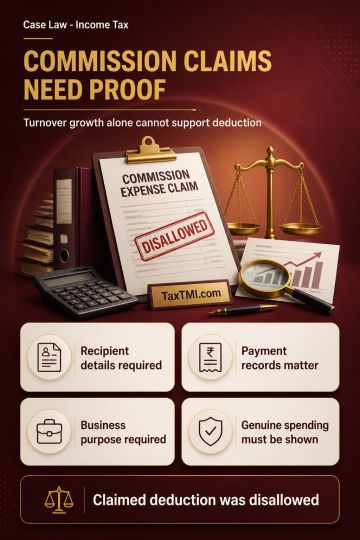
Business expenditure deduction requires proof of genuine commission payments and commercial allowability; turnover growth alone cannot validate the cl...
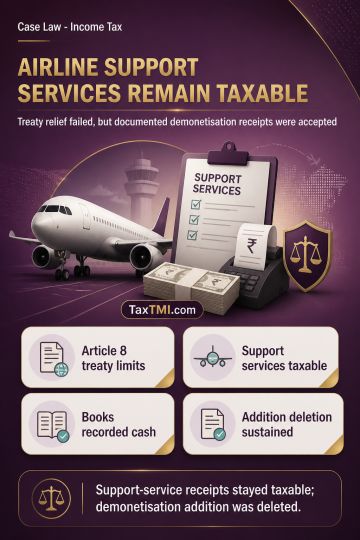
Article 8 treaty coverage excluded third-party airline support services, while documented demonetisation cash receipts remained accepted business inco...
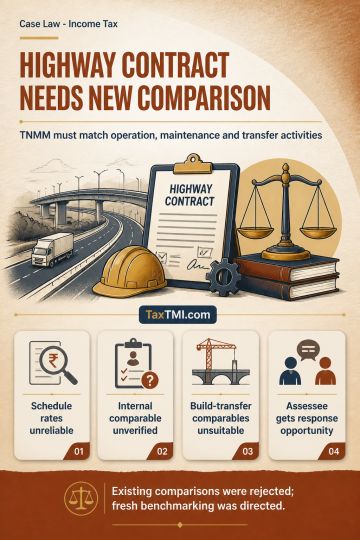
Functional comparability under TNMM requires highway contract benchmarks to reflect operation, maintenance and transfer activities, requiring fresh be...
Validity of Revision u/s 263 - An order which is prejudicial to revenue even if no Tax Loss - The High Court found that the AO's assessment did not adequately address the genuineness and creditworthiness of the loan transactions from certain entities, identified in a DDIT investigation report as shell companies operated by an entry operator. This oversight was deemed a significant inquiry lapse, rendering the assessment order both erroneous and prejudicial to the Revenue's interests. - The Court underscored the principle that an order could be deemed erroneous if it was prejudicial to the Revenue, even if it did not result in immediate tax loss, reflecting a broader interpretation aimed at preserving the Revenue's interests.
Validity of Revision u/s 263 - An order which is prejudicial to revenue even if no Tax Loss - The High Court found that the AO's assessment did not adequately address the genuineness and creditworthiness of the loan transactions from certain entities, identified in a DDIT investigation report as shell companies operated by an entry operator. This oversight was deemed a significant inquiry lapse, rendering the assessment order both erroneous and prejudicial to the Revenue's interests. - The Court underscored the principle that an order could be deemed erroneous if it was prejudicial to the Revenue, even if it did not result in immediate tax loss, reflecting a broader interpretation aimed at preserving the Revenue's interests.
Note: It is a system-generated summary and is for quick reference only.
 TaxTMI
 of 4788







 Join Channel


 TaxTMI