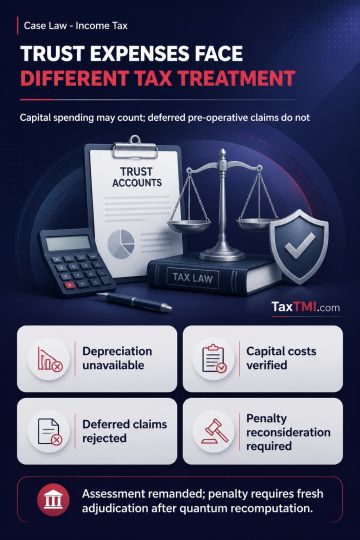
Charitable trust income application permits verified capital expenditure but rejects deferred pre-operative claims and requires reconsideration of con...
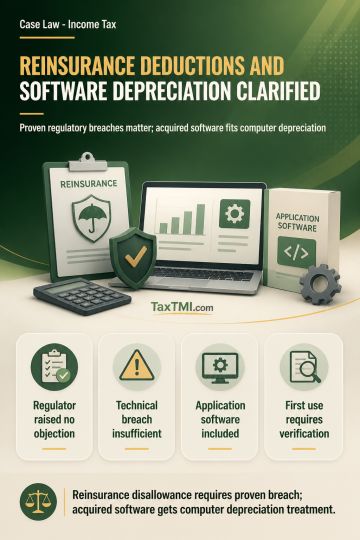
Reinsurance premium deductions require established regulatory breaches, while independently acquired software qualifies within the computer depreciati...
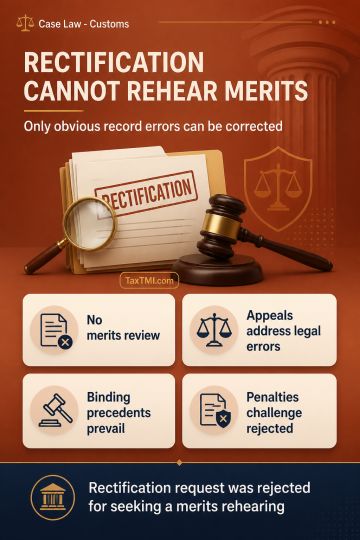
Rectification of mistake remains limited to self-evident record errors, preventing merits review through miscellaneous applications and preserving fin...
Tender creditworthiness conditions may extend to de facto Promoter Directors, with post-participation challenges generally barred absent arbitrariness...
Page of 4814
Press 'Enter' after typing page number.
1121 to 1140 of 96262 Results
❮
❯
❯❯
0 / 200
Expand Note
Add to Folder
No Folders have been created
+
Are you sure you want to delete "My most important" ?
High court power / jurisdiction to condone the delay - delay in filing an application seeking special leave to appeal against an acquittal. - After thorough consideration, the High court concluded that there is indeed power to condone the delay in such cases. - The court emphasized the precedential authority of a Supreme Court judgment, stating that it is binding on all courts unless distinguished, overruled, or set aside. The argument that the Supreme Court decision was inadequately considered was rejected. - The court analyzed the provisions of the Criminal Procedure Code and the Limitation Act, particularly regarding their applicability in appeals against acquittal. It concluded that Section 5 of the Limitation Act can be availed in such appeals.
High court power / jurisdiction to condone the delay - delay in filing an application seeking special leave to appeal against an acquittal. - After thorough consideration, the High court concluded that there is indeed power to condone the delay in such cases. - The court emphasized the precedential authority of a Supreme Court judgment, stating that it is binding on all courts unless distinguished, overruled, or set aside. The argument that the Supreme Court decision was inadequately considered was rejected. - The court analyzed the provisions of the Criminal Procedure Code and the Limitation Act, particularly regarding their applicability in appeals against acquittal. It concluded that Section 5 of the Limitation Act can be availed in such appeals.
Note: It is a system-generated summary and is for quick reference only.
 TaxTMI
  TaxTMI
 of 4814










 Join Channel


