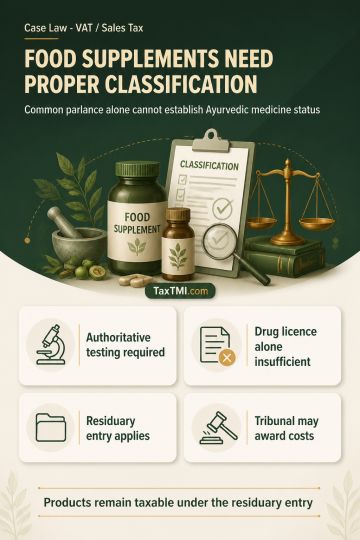
Food supplement classification requires common parlance and authoritative tests, preventing treatment as proprietary Ayurvedic medicines without suppo...
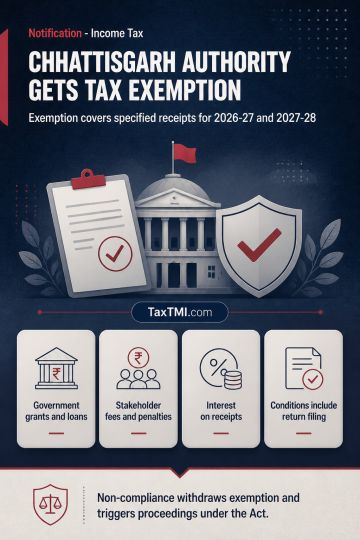
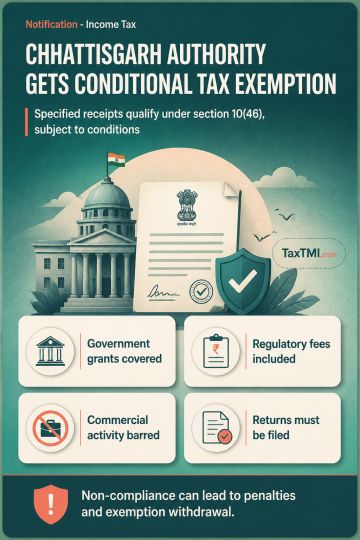
Specified regulatory authority income receives conditional tax exemption, subject to non-commercial activity, unchanged income character, and return f...
Tax exemption for regulatory authority income applies retrospectively, subject to non-commercial activity, unchanged income sources, and return-filing...
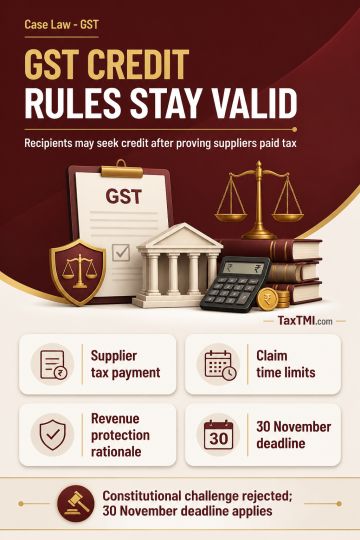
Input tax credit conditions remain constitutionally valid, with eligible recipient claims considered under GST circulars and retrospective filing dead...
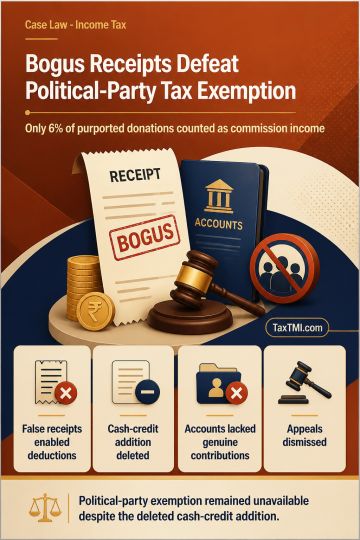
Bogus donation receipts justified commission income assessment and defeated political-party tax exemption for inaccurate accounts and reporting failur...
Page of 4811
Press 'Enter' after typing page number.
901 to 920 of 96208 Results
❮
❯
❯❯
0 / 200
Expand Note
Add to Folder
No Folders have been created
+
Are you sure you want to delete "My most important" ?
High court power / jurisdiction to condone the delay - delay in filing an application seeking special leave to appeal against an acquittal. - After thorough consideration, the High court concluded that there is indeed power to condone the delay in such cases. - The court emphasized the precedential authority of a Supreme Court judgment, stating that it is binding on all courts unless distinguished, overruled, or set aside. The argument that the Supreme Court decision was inadequately considered was rejected. - The court analyzed the provisions of the Criminal Procedure Code and the Limitation Act, particularly regarding their applicability in appeals against acquittal. It concluded that Section 5 of the Limitation Act can be availed in such appeals.
High court power / jurisdiction to condone the delay - delay in filing an application seeking special leave to appeal against an acquittal. - After thorough consideration, the High court concluded that there is indeed power to condone the delay in such cases. - The court emphasized the precedential authority of a Supreme Court judgment, stating that it is binding on all courts unless distinguished, overruled, or set aside. The argument that the Supreme Court decision was inadequately considered was rejected. - The court analyzed the provisions of the Criminal Procedure Code and the Limitation Act, particularly regarding their applicability in appeals against acquittal. It concluded that Section 5 of the Limitation Act can be availed in such appeals.
Note: It is a system-generated summary and is for quick reference only.
 TaxTMI
  TaxTMI
 of 4811






 Join Channel