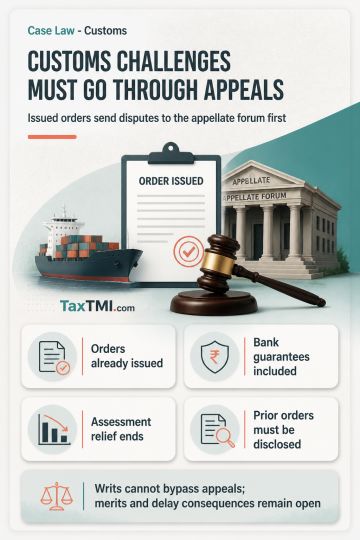
Appellate jurisdiction over baggage imports is excluded, requiring confiscation challenges involving passenger-carried gold to proceed by statutory re...
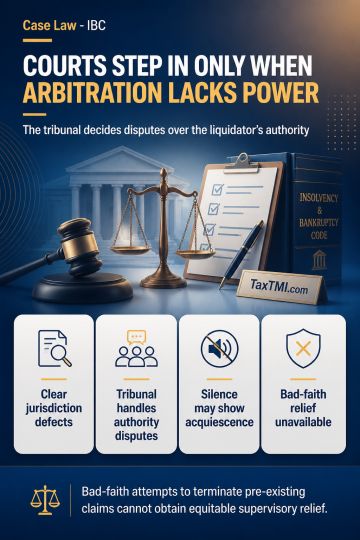
Article 227 review permits intervention in arbitration only for manifest, patent inherent jurisdictional defects, not representational authority dispu...
High court power / jurisdiction to condone the delay - delay in filing an application seeking special leave to appeal against an acquittal. - After thorough consideration, the High court concluded that there is indeed power to condone the delay in such cases. - The court emphasized the precedential authority of a Supreme Court judgment, stating that it is binding on all courts unless distinguished, overruled, or set aside. The argument that the Supreme Court decision was inadequately considered was rejected. - The court analyzed the provisions of the Criminal Procedure Code and the Limitation Act, particularly regarding their applicability in appeals against acquittal. It concluded that Section 5 of the Limitation Act can be availed in such appeals.
High court power / jurisdiction to condone the delay - delay in filing an application seeking special leave to appeal against an acquittal. - After thorough consideration, the High court concluded that there is indeed power to condone the delay in such cases. - The court emphasized the precedential authority of a Supreme Court judgment, stating that it is binding on all courts unless distinguished, overruled, or set aside. The argument that the Supreme Court decision was inadequately considered was rejected. - The court analyzed the provisions of the Criminal Procedure Code and the Limitation Act, particularly regarding their applicability in appeals against acquittal. It concluded that Section 5 of the Limitation Act can be availed in such appeals.
Note: It is a system-generated summary and is for quick reference only.
 TaxTMI
  TaxTMI
 of 4891