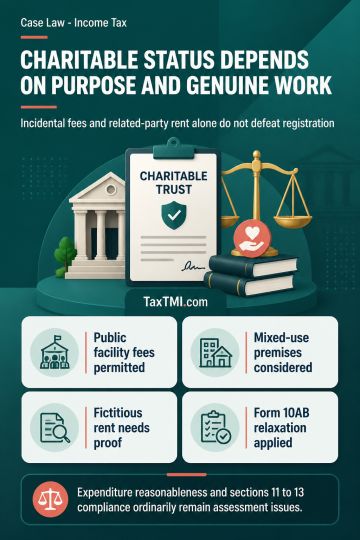
Charitable registration turns on predominant purpose and genuine activities, while incidental fees and related-party rent require supporting adverse m...
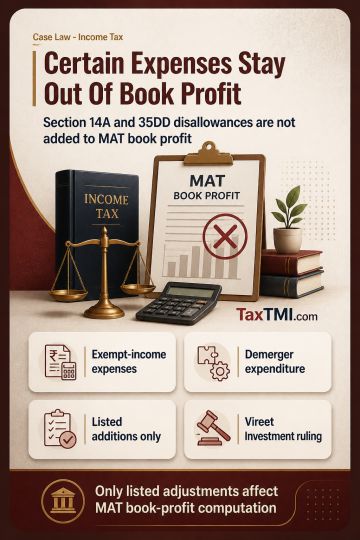
MAT book-profit adjustments exclude disallowances for exempt-income expenditure and demerger expenditure unless expressly listed under the statutory c...
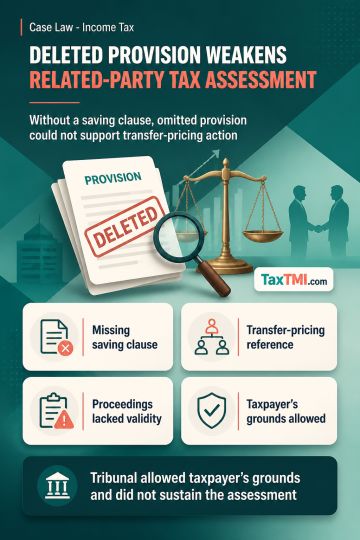
Omitted specified domestic transaction provision invalidates related-party expenditure transfer-pricing references and assessments based on consequent...
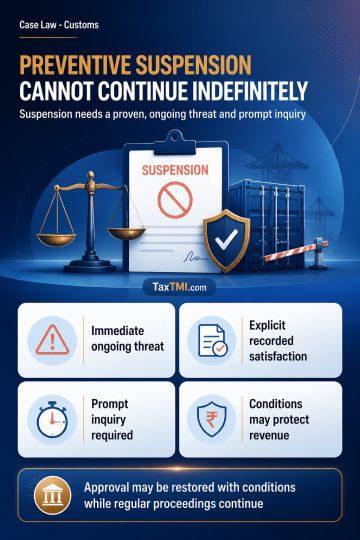
Preventive suspension requires an immediate continuing threat and cannot become indefinite without inquiry, fresh evidence, or proportionate safeguard...
Page of 4807
Press 'Enter' after typing page number.
401 to 420 of 96140 Results
❮
❯
❯❯
0 / 200
Expand Note
Add to Folder
No Folders have been created
+
Are you sure you want to delete "My most important" ?
High court power / jurisdiction to condone the delay - delay in filing an application seeking special leave to appeal against an acquittal. - After thorough consideration, the High court concluded that there is indeed power to condone the delay in such cases. - The court emphasized the precedential authority of a Supreme Court judgment, stating that it is binding on all courts unless distinguished, overruled, or set aside. The argument that the Supreme Court decision was inadequately considered was rejected. - The court analyzed the provisions of the Criminal Procedure Code and the Limitation Act, particularly regarding their applicability in appeals against acquittal. It concluded that Section 5 of the Limitation Act can be availed in such appeals.
High court power / jurisdiction to condone the delay - delay in filing an application seeking special leave to appeal against an acquittal. - After thorough consideration, the High court concluded that there is indeed power to condone the delay in such cases. - The court emphasized the precedential authority of a Supreme Court judgment, stating that it is binding on all courts unless distinguished, overruled, or set aside. The argument that the Supreme Court decision was inadequately considered was rejected. - The court analyzed the provisions of the Criminal Procedure Code and the Limitation Act, particularly regarding their applicability in appeals against acquittal. It concluded that Section 5 of the Limitation Act can be availed in such appeals.
Note: It is a system-generated summary and is for quick reference only.
 TaxTMI
 of 4807




 Join Channel


 TaxTMI