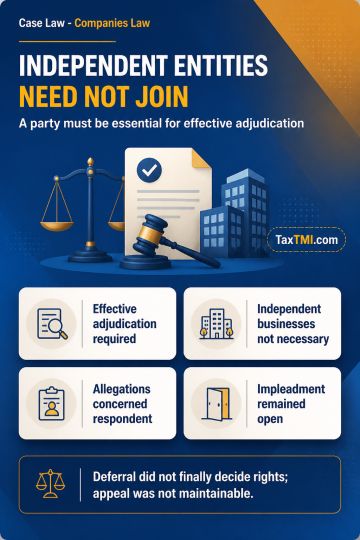
Necessary-party requirements limit impleadment of independent entities, while deferred consideration does not create an appealable adverse determinati...
Food supplement classification requires common parlance and authoritative tests, preventing treatment as proprietary Ayurvedic medicines without suppo...
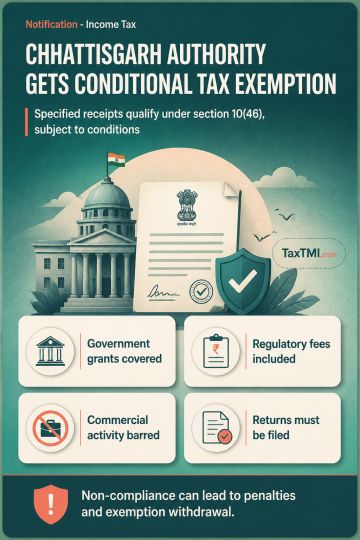
Specified regulatory authority income receives conditional tax exemption, subject to non-commercial activity, unchanged income character, and return f...
Tax exemption for regulatory authority income applies retrospectively, subject to non-commercial activity, unchanged income sources, and return-filing...
Input tax credit conditions remain constitutionally valid, with eligible recipient claims considered under GST circulars and retrospective filing dead...
Validity of reopening notice - Absence of the manual/digital signature of the A.O in the copy of the Reopening notice - Elaborating on the term "signed", it was observed that that same was to be construed as giving one's name to signify assent or adhesion to by signing one's name; to attest by signing or when a person is unable to write his name then affixation of "mark" by such person. - The Tribunal highlighted significant procedural lapses, notably the absence of the Assessing Officer's signature on the notice under section 148, leading to the quashing of the assessment order. The Tribunal's decision underscores the importance of adhering to procedural requirements, emphasizing that such lapses can invalidate otherwise substantive assessments.
Validity of reopening notice - Absence of the manual/digital signature of the A.O in the copy of the Reopening notice - Elaborating on the term "signed", it was observed that that same was to be construed as giving one's name to signify assent or adhesion to by signing one's name; to attest by signing or when a person is unable to write his name then affixation of "mark" by such person. - The Tribunal highlighted significant procedural lapses, notably the absence of the Assessing Officer's signature on the notice under section 148, leading to the quashing of the assessment order. The Tribunal's decision underscores the importance of adhering to procedural requirements, emphasizing that such lapses can invalidate otherwise substantive assessments.
Note: It is a system-generated summary and is for quick reference only.
 TaxTMI
 of 4805
















 Join Channel


 TaxTMI