Development agreements require legal possession or effective enjoyment for capital gains transfer; permissive possession and deferred consideration de...
Prolonged sterilisation of development rights supports capital-gains treatment, while business-income disallowances cannot govern capital-gains comput...
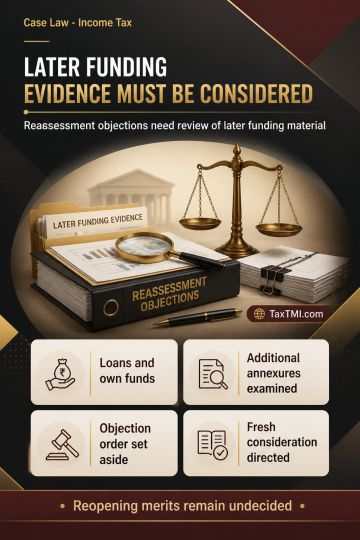
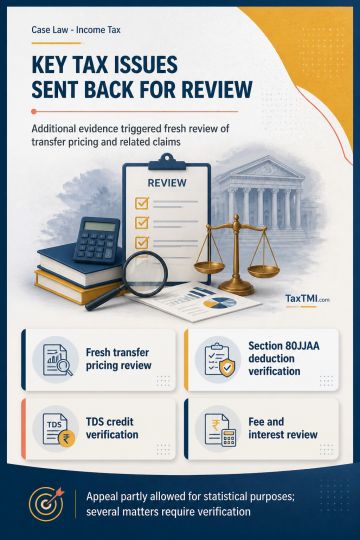
Additional evidence in transfer pricing dispute leads to fresh examination, while tax deductions, TDS credit, fee and refund interest require verifica...
Category II AIF pass-through taxation preserves non-business income character; investment receipts cannot be reclassified without applying recognised ...
Dishonor of cheques - Condonation of delay of 1259 days in filing the complaint for an offence punishable u/s 138 of the Negotiable Instruments Act, 1881 - Exercise of Discretion by Lower Courts- sufficient reason to condone the delay or not - The High courts uphold the discretion exercised by the lower courts, emphasizing the importance of balancing procedural requirements with substantive justice. - Various legal principles and precedents are cited and analyzed throughout the proceedings, including the liberal interpretation of the concept of "sufficient cause" for condonation of delay and the significance of balancing substantive justice with procedural requirements. - Ultimately, the court dismisses the petition, affirming the lower courts' exercise of discretion to condone the delay.
Dishonor of cheques - Condonation of delay of 1259 days in filing the complaint for an offence punishable u/s 138 of the Negotiable Instruments Act, 1881 - Exercise of Discretion by Lower Courts- sufficient reason to condone the delay or not - The High courts uphold the discretion exercised by the lower courts, emphasizing the importance of balancing procedural requirements with substantive justice. - Various legal principles and precedents are cited and analyzed throughout the proceedings, including the liberal interpretation of the concept of "sufficient cause" for condonation of delay and the significance of balancing substantive justice with procedural requirements. - Ultimately, the court dismisses the petition, affirming the lower courts' exercise of discretion to condone the delay.
Note: It is a system-generated summary and is for quick reference only.
 TaxTMI
 of 4805















 Join Channel


 TaxTMI
