CENVAT credit for trading requires reversal, while taxable-service rental credit remains proportionately available and limitation issues await resolut...
Vicarious liability for dishonoured company cheques may extend to non-signatory directors where complaints contain foundational responsibility avermen...
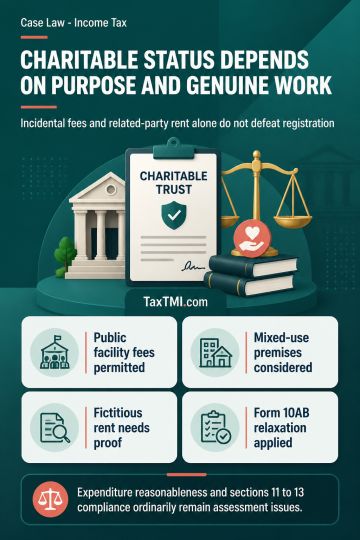
Charitable registration turns on predominant purpose and genuine activities, while incidental fees and related-party rent require supporting adverse m...
MAT book-profit adjustments exclude disallowances for exempt-income expenditure and demerger expenditure unless expressly listed under the statutory c...
Page of 4809
Press 'Enter' after typing page number.
421 to 440 of 96174 Results
❮
❯
❯❯
0 / 200
Expand Note
Add to Folder
No Folders have been created
+
Are you sure you want to delete "My most important" ?
Correctness of erasure of credit already availed by prospective invalidation of eligibility for retention of credit that would subject those services already procured and used in manufacture/rendering of services to the test of eligibility once again - deletion of rule 6(5) of CENVAT Credit Rules, 2004 with effect from 31st March 2011 - The Tribunal emphasizes that the deletion of rule 6(5) does not affect the validity of credit availed under rule 3 of the CENVAT Credit Rules, 2004, at the time of procurement of services. - It concludes that the appellant's entitlement to credit cannot be curtailed or impacted by the deletion of rule 6(5), and the impugned order is not sustainable.
Correctness of erasure of credit already availed by prospective invalidation of eligibility for retention of credit that would subject those services already procured and used in manufacture/rendering of services to the test of eligibility once again - deletion of rule 6(5) of CENVAT Credit Rules, 2004 with effect from 31st March 2011 - The Tribunal emphasizes that the deletion of rule 6(5) does not affect the validity of credit availed under rule 3 of the CENVAT Credit Rules, 2004, at the time of procurement of services. - It concludes that the appellant's entitlement to credit cannot be curtailed or impacted by the deletion of rule 6(5), and the impugned order is not sustainable.
Note: It is a system-generated summary and is for quick reference only.
 TaxTMI
  TaxTMI
 of 4809






 Join Channel