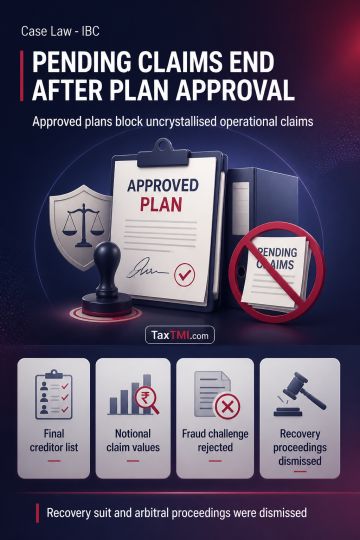
Clean slate principle extinguishes uncrystallised operational claims and bars continuation of pending recovery and arbitral proceedings after plan app...
Works contract classification governs composite layout-development contracts where VAT-paid goods are transferred alongside construction and infrastru...
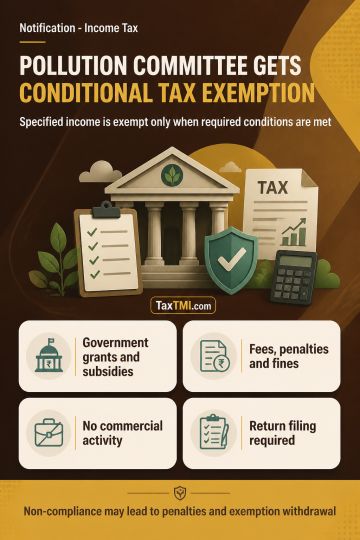
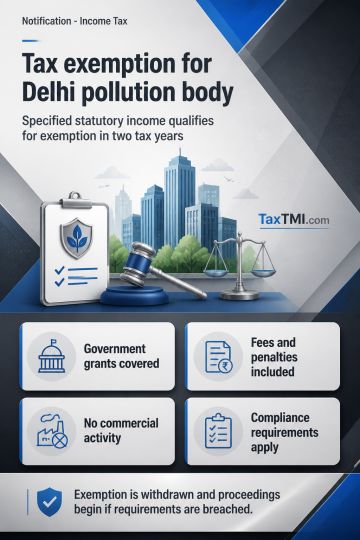
Specified income tax exemption for pollution control body remains conditional on non-commercial activity, unchanged income character, and return filin...
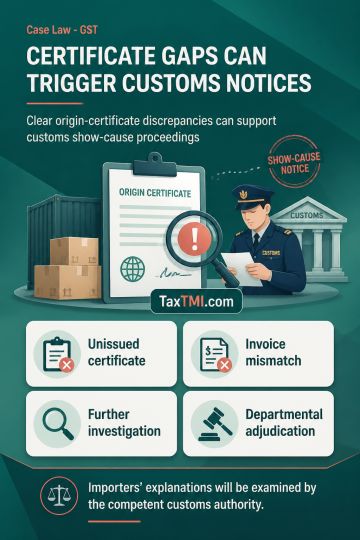
Jurisdictional facts in certificate-of-origin discrepancies can support customs show-cause proceedings, leaving factual explanations for departmental ...
The circular issued by the Central Board of Excise and Customs on January 1, 2013, instructs department officers to initiate recovery proceedings on confirmed demands unless a stay order is in place. The article outlines the appeal process and time limits under the Central Excise Act, 1944, and the Finance Act, 1994, for both central excise and service tax. It emphasizes the importance of filing appeals and stay petitions promptly to prevent recovery actions. The article also highlights legal recourse, such as filing writ petitions in High Courts, to seek interim relief against coercive recovery measures by the department.
The circular issued by the Central Board of Excise and Customs on January 1, 2013, instructs department officers to initiate recovery proceedings on confirmed demands unless a stay order is in place. The article outlines the appeal process and time limits under the Central Excise Act, 1944, and the Finance Act, 1994, for both central excise and service tax. It emphasizes the importance of filing appeals and stay petitions promptly to prevent recovery actions. The article also highlights legal recourse, such as filing writ petitions in High Courts, to seek interim relief against coercive recovery measures by the department.
Note: It is a system-generated summary and is for quick reference only.
 TaxTMI
  TaxTMI
 of 4809







 Join Channel