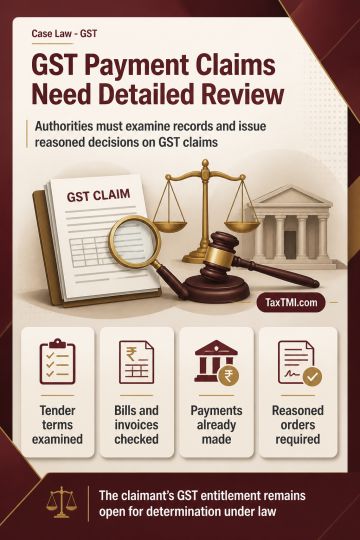
GST payment representations require record-based, reasoned decisions while substantive entitlement remains open for determination by competent authori...
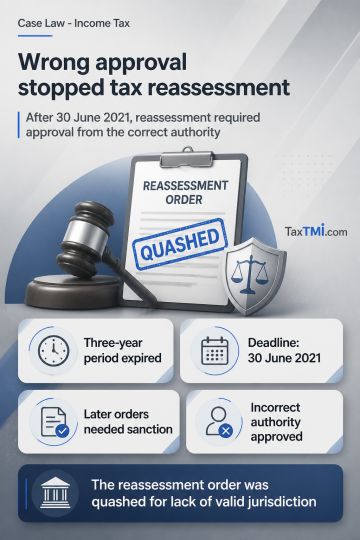
Reassessment sanction under extended limitation required approval from the competent specified authority, invalidating proceedings approved by an inco...
Internal CUP benchmarking for fixed-rate Masala Bonds prevails over floating external comparables, eliminating the related transfer-pricing adjustment...
Jurisdictional validity of revision notices: incorrect official capacity and mere change of opinion invalidate revision of property income assessments...
Dishonor of Cheque - For proving offence under Section 138 of NI Act, it has to be established that the cheque has been issued by the accused to discharge a legally enforceable debt or liability and the same has been dishonoured for insufficiency of funds etc. and despite receipt of statutory notice of demand, the accused has failed to pay the amount of cheque within the stipulated time - offence under Section 420 of IPC is made out at the time of issuance of the cheque itself which is not the case with offence under Section 138 of NI Act. Therefore, the two offences are distinct from each other and the principle of double jeopardy or rule of estoppel does not come into play. - The complainants are well within their rights to continue prosecution for both these offences i.e. offences under Section 138 of NI Act and Section 420 of IPC simultaneously. - HC
Dishonor of Cheque - For proving offence under Section 138 of NI Act, it has to be established that the cheque has been issued by the accused to discharge a legally enforceable debt or liability and the same has been dishonoured for insufficiency of funds etc. and despite receipt of statutory notice of demand, the accused has failed to pay the amount of cheque within the stipulated time - offence under Section 420 of IPC is made out at the time of issuance of the cheque itself which is not the case with offence under Section 138 of NI Act. Therefore, the two offences are distinct from each other and the principle of double jeopardy or rule of estoppel does not come into play. - The complainants are well within their rights to continue prosecution for both these offences i.e. offences under Section 138 of NI Act and Section 420 of IPC simultaneously. - HC
Note: It is a system-generated summary and is for quick reference only.
 TaxTMI
  TaxTMI



















 Join Channel


