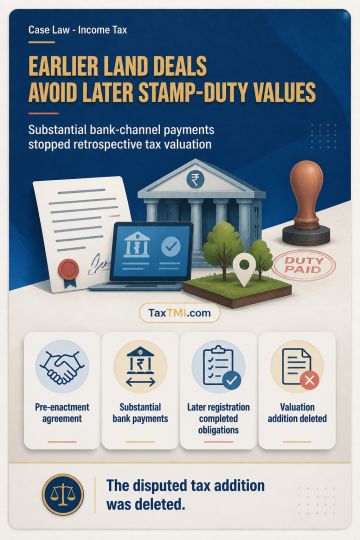
Pre-enactment land-sale agreements escape stamp-duty value substitution where substantial banking-channel consideration was received before Section 43...
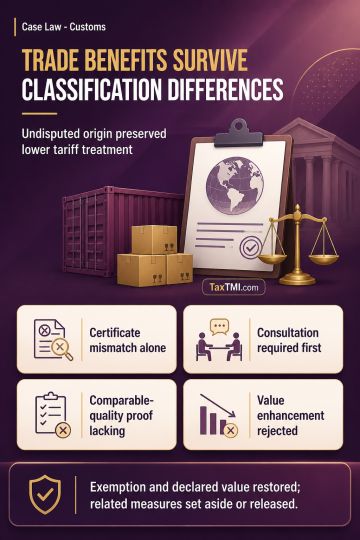
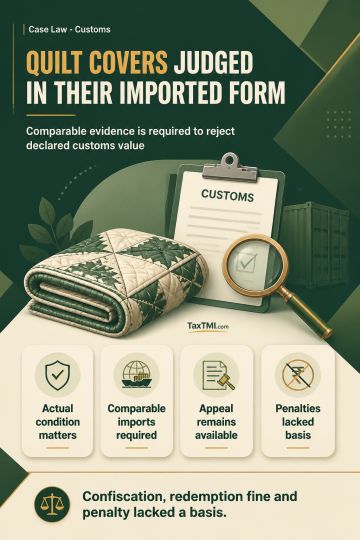
Customs valuation and classification require comparable evidence and assessment of imported goods in their actual condition, invalidating related pena...
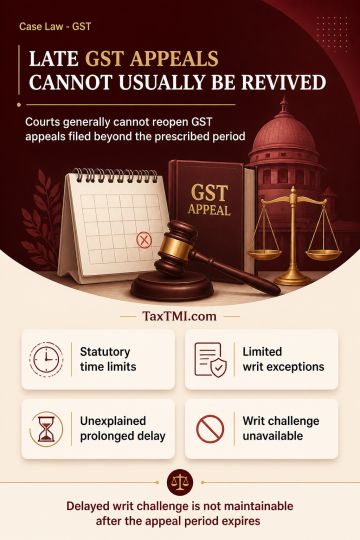
Statutory appellate limitation under the BGST Act forms part of the legislative scheme for prompt GST dispute resolution. Writ jurisdiction may be available exceptionally for fundamental-rights violations, breach of natural justice, jurisdictional excess or a vires challenge, but not routinely to revive an expired appellate remedy. The prescribed extension period for a GST appeal constrains the appellate authority, and Article 226 cannot be used to disregard that substantive limitation or condone delay beyond it. An unexplained prolonged delay in approaching the High Court after an appeal is rejected as time-barred undermines the limitation regime; a writ challenge in those circumstances is not maintainable.
Statutory appellate limitation under the BGST Act forms part of the legislative scheme for prompt GST dispute resolution. Writ jurisdiction may be available exceptionally for fundamental-rights violations, breach of natural justice, jurisdictional excess or a vires challenge, but not routinely to revive an expired appellate remedy. The prescribed extension period for a GST appeal constrains the appellate authority, and Article 226 cannot be used to disregard that substantive limitation or condone delay beyond it. An unexplained prolonged delay in approaching the High Court after an appeal is rejected as time-barred undermines the limitation regime; a writ challenge in those circumstances is not maintainable.
Note: It is a system-generated summary and is for quick reference only.
 TaxTMI
  TaxTMI
 of 4828






 Join Channel