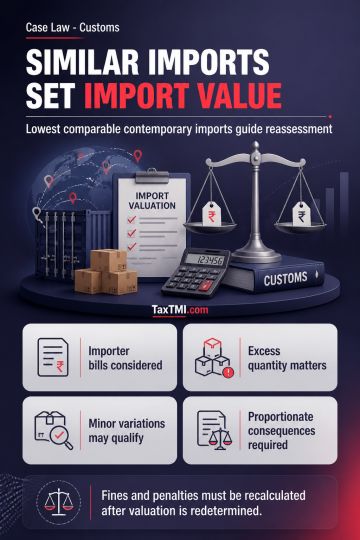
Customs valuation must use comparable contemporary imports, while confiscation fines and penalties require proportionate recalculation on reassessed v...
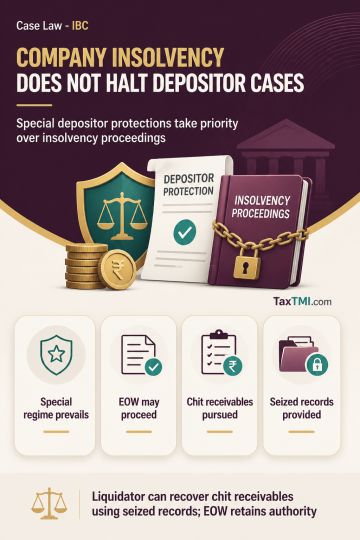
Depositor-protection proceedings prevail over corporate insolvency, while liquidators may recover chit receivables using copies of seized company reco...
Intermediary service classification fails where overseas admission facilitation is supplied independently, preserving export treatment and small-provi...
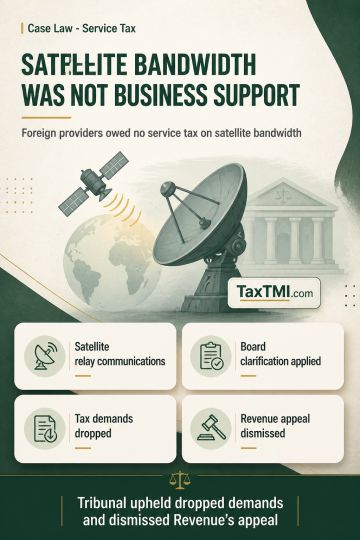
Satellite transponder bandwidth is telecommunication, not Business Support Service; foreign non-telegraph providers triggered no service tax liability...
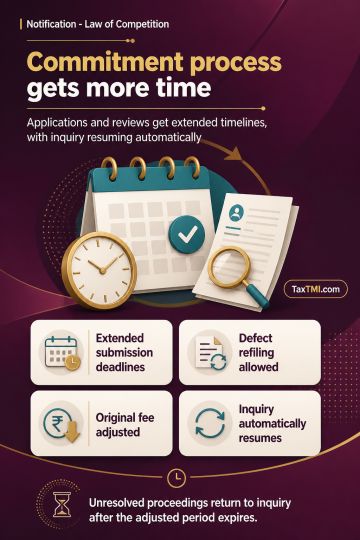
Commitment proceedings gain extended timelines, structured defect refiling, and automatic resumption of inquiry after the adjusted completion period e...
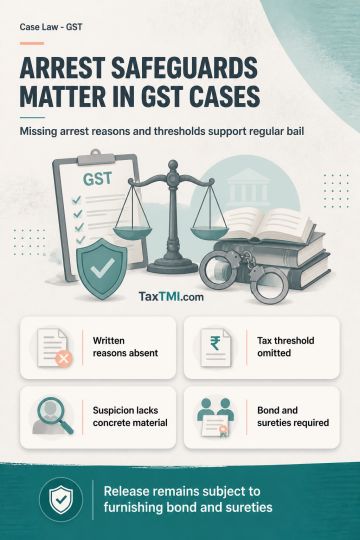
Sections 69 and 132 of the CGST Act are addressed in relation to regular bail for allegations of fraudulent invoices, wrongful input tax credit, falsified records and shell entities. Arrest requires recorded reasons to believe tax evasion or the specified conditions under section 132. The absence of those reasons in the arrest authorisation and memo, together with omission of the applicable tax-evasion threshold relevant to conviction, is treated as indicating suspicion rather than concrete material. These deficiencies support release on regular bail, subject to furnishing a bond and sureties.
Sections 69 and 132 of the CGST Act are addressed in relation to regular bail for allegations of fraudulent invoices, wrongful input tax credit, falsified records and shell entities. Arrest requires recorded reasons to believe tax evasion or the specified conditions under section 132. The absence of those reasons in the arrest authorisation and memo, together with omission of the applicable tax-evasion threshold relevant to conviction, is treated as indicating suspicion rather than concrete material. These deficiencies support release on regular bail, subject to furnishing a bond and sureties.
Note: It is a system-generated summary and is for quick reference only.
 TaxTMI
  TaxTMI
 of 4828







 Join Channel