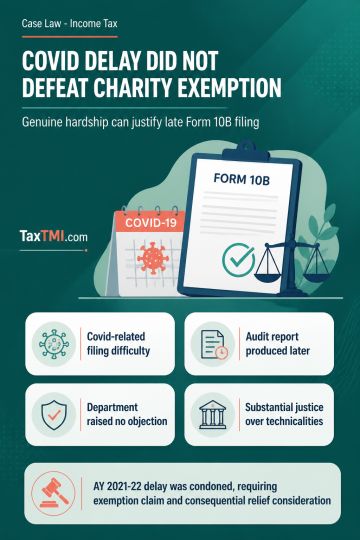
Belated Form 10B filing during Covid-19 cannot defeat charitable exemption where genuine hardship warrants condonation and substantial justice prevail...
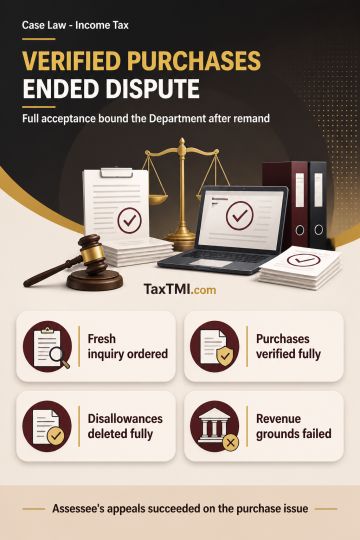
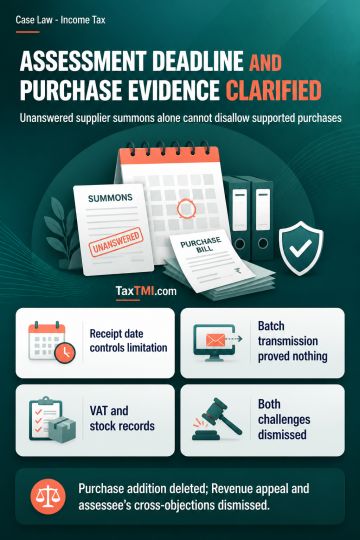
Limitation for consequential assessments runs from prescribed authority receipt, while verified purchases cannot be disallowed merely for unanswered s...
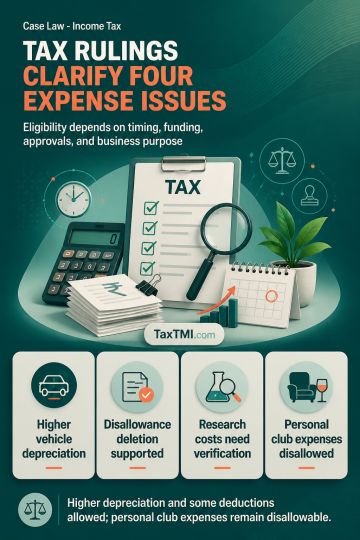
Higher depreciation for qualifying commercial vehicles, exempt-income disallowance, research deduction verification, and club-expense treatment clarif...
Charitable registration renewal cannot become an assessment of receipts, profitability or annual exemption compliance, requiring renewal and donation ...
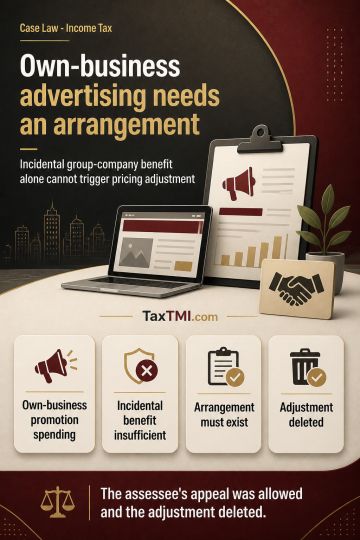
AMP expenditure for own business is not an international transaction without an associated-enterprise arrangement, eliminating transfer pricing adjust...
Transfer-pricing benchmarking requires exclusion of comparables...
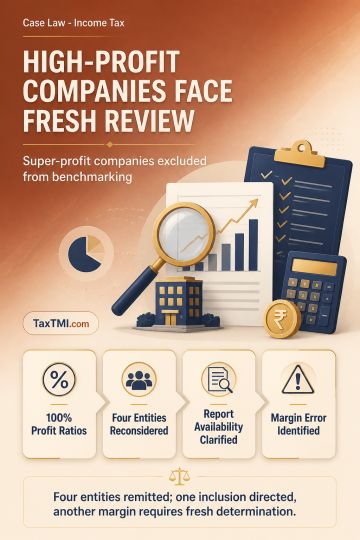
Transfer-pricing comparability requires exclusion of financially illogical super-profit comparables and correction of unsupported annual-report and margin findings.
Contents
Summary
Note
Bookmark
Share
✓ Copied successfully !
Print
Print Options
For full text, please login
Login to TaxTMI
Verification Pending
The Email Id has not been verified. Click on the link we have sent on
Transfer-pricing benchmarking requires exclusion of comparables with financially illogical gross-profit-to-sales ratios of 100 per cent or more, applying the principle that super-profit-making companies should not be retained for comparability analysis. The inclusion of four such entities was set aside and remitted to the TPO for fresh consideration after hearing the assessee. A comparable could not be rejected for non-availability of its annual report where that report had been furnished to the TPO; its inclusion in the benchmarking exercise was directed. The TPO's positive gross-profit-margin computation for another comparable was also found erroneous because the record showed a negative margin, requiring fresh determination.
Transfer-pricing benchmarking requires exclusion of comparables with financially illogical gross-profit-to-sales ratios of 100 per cent or more, applying the principle that super-profit-making companies should not be retained for comparability analysis. The inclusion of four such entities was set aside and remitted to the TPO for fresh consideration after hearing the assessee. A comparable could not be rejected for non-availability of its annual report where that report had been furnished to the TPO; its inclusion in the benchmarking exercise was directed. The TPO's positive gross-profit-margin computation for another comparable was also found erroneous because the record showed a negative margin, requiring fresh determination.
Note: It is a system-generated summary and is for quick reference only.
 TaxTMI
  TaxTMI
 of 4828






 Join Channel