Donor-directed corpus contributions retain capital character despite exemption claims under section 10(23C)(vi), preventing their treatment as taxable...
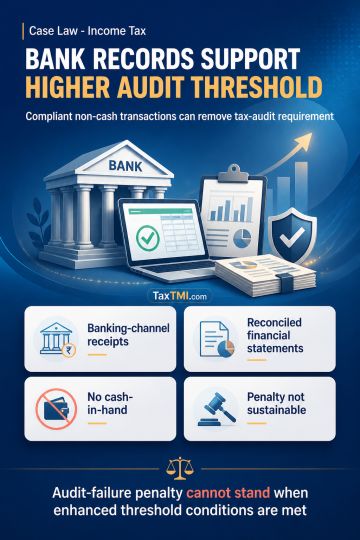
Enhanced tax-audit threshold applies where banking records establish compliant non-cash receipts and payments, eliminating penalty exposure for audit ...
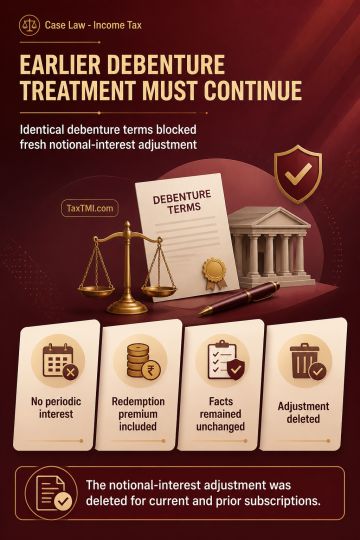
Transfer pricing consistency protects identical non-interest-bearing debenture terms from a later notional-interest adjustment without valid statutory...
Rectification of debatable deduction claims cannot reverse scrutiny-approved co-operative society interest income deductions as apparent record errors...
Cash-method accounting bars presumptive interest taxation, while unsupported securities and share-trading additions require reliable material and veri...
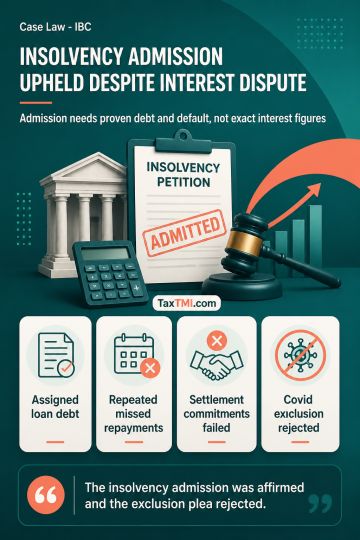
Section 7 admission requires established financial debt and default, not precise interest quantification, while post-suspension defaults remain action...
Page of 4821
Press 'Enter' after typing page number.
341 to 360 of 96408 Results
❮
❯
❯❯
0 / 200
Expand Note
Add to Folder
No Folders have been created
+
Are you sure you want to delete "My most important" ?
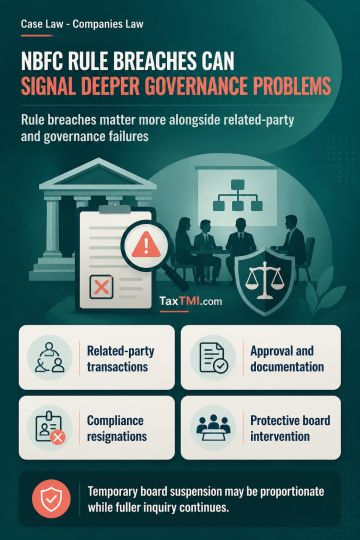
For an RBI-regulated NBFC, breach of binding prudential norms may constitute conduct prejudicial to the company or public interest when assessed cumulatively with related-party dealings, inadequate compliance controls and governance failures. Regulatory penalties do not necessarily preclude oppression and mismanagement jurisdiction, because regulatory supervision and corporate-protection remedies address distinct concerns. Transactions involving related parties require demonstrable approval, documentation, security and recovery arrangements; retrospective omnibus approval may not validate earlier transactions. Resignations of compliance personnel and removal of independent directors may be relevant indicators of weakened governance safeguards. Administrator-led intervention and temporary board suspension may be proportionate protective measures where no equally effective, less intrusive alternative prevents further prejudice pending fuller inquiry.
For an RBI-regulated NBFC, breach of binding prudential norms may constitute conduct prejudicial to the company or public interest when assessed cumulatively with related-party dealings, inadequate compliance controls and governance failures. Regulatory penalties do not necessarily preclude oppression and mismanagement jurisdiction, because regulatory supervision and corporate-protection remedies address distinct concerns. Transactions involving related parties require demonstrable approval, documentation, security and recovery arrangements; retrospective omnibus approval may not validate earlier transactions. Resignations of compliance personnel and removal of independent directors may be relevant indicators of weakened governance safeguards. Administrator-led intervention and temporary board suspension may be proportionate protective measures where no equally effective, less intrusive alternative prevents further prejudice pending fuller inquiry.
Note: It is a system-generated summary and is for quick reference only.
 TaxTMI
  TaxTMI
 of 4821
















 Join Channel