Prolonged sterilisation of development rights supports capital-gains treatment, while business-income disallowances cannot govern capital-gains comput...
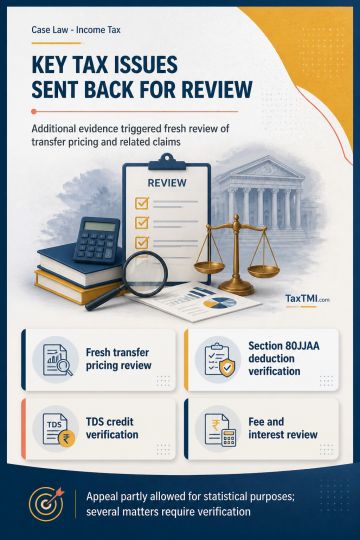
Additional evidence in transfer pricing dispute leads to fresh examination, while tax deductions, TDS credit, fee and refund interest require verifica...
Category II AIF pass-through taxation preserves non-business income character; investment receipts cannot be reclassified without applying recognised ...
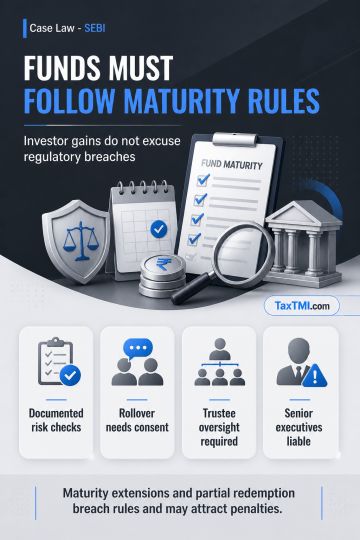
Mutual fund maturity rules require proper rollover, redemption, disclosure, and due diligence; investor gains cannot excuse regulatory breaches or pen...
Threshold exemption excludes exempt services, while stamp-paper purchases avoid reverse charge; consequential service tax penalties were also set asid...
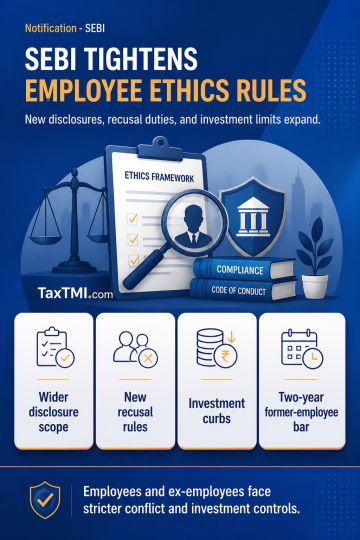
Employee conflict disclosures and investment restrictions expand with new recusal duties, post-employment limits, and compliance reporting requirement...
Page of 4826
Press 'Enter' after typing page number.
1721 to 1740 of 96510 Results
❮
❯
❯❯
0 / 200
Expand Note
Add to Folder
No Folders have been created
+
Are you sure you want to delete "My most important" ?
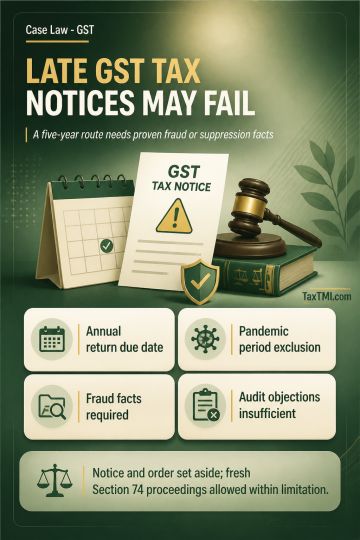
GST demand limitation under Section 73 runs from the due date for the annual return; extensions of those due dates change its commencement, and pandemic-period exclusion must be applied when calculating the three-year period. A notice issued after the resulting deadline cannot be sustained under the ordinary limitation. Recourse to Section 74's five-year period requires the Assessing Officer's satisfaction, based on disclosed foundational facts, that fraud, wilful misstatement or suppression caused the tax shortfall or excess input tax credit. Audit objections and bare statutory assertions are insufficient. The show-cause notice and consequential order were set aside, with liberty for fresh Section 74 proceedings within the applicable extended limitation.
GST demand limitation under Section 73 runs from the due date for the annual return; extensions of those due dates change its commencement, and pandemic-period exclusion must be applied when calculating the three-year period. A notice issued after the resulting deadline cannot be sustained under the ordinary limitation. Recourse to Section 74's five-year period requires the Assessing Officer's satisfaction, based on disclosed foundational facts, that fraud, wilful misstatement or suppression caused the tax shortfall or excess input tax credit. Audit objections and bare statutory assertions are insufficient. The show-cause notice and consequential order were set aside, with liberty for fresh Section 74 proceedings within the applicable extended limitation.
Note: It is a system-generated summary and is for quick reference only.
 TaxTMI
  TaxTMI
 of 4826













 Join Channel