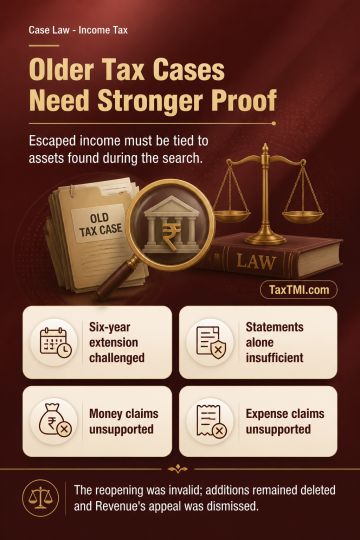
Extended reassessment limitation in search cases requires asset-linked escaped income, invalidating additions based only on unexplained money or expen...
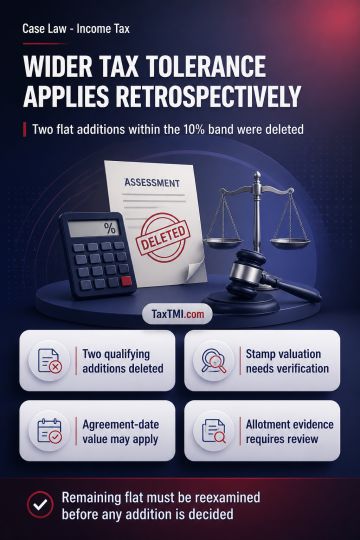
Enhanced tolerance band under section 43CA applies retrospectively, deleting qualifying deemed-sale additions while disputed stamp valuation requires ...
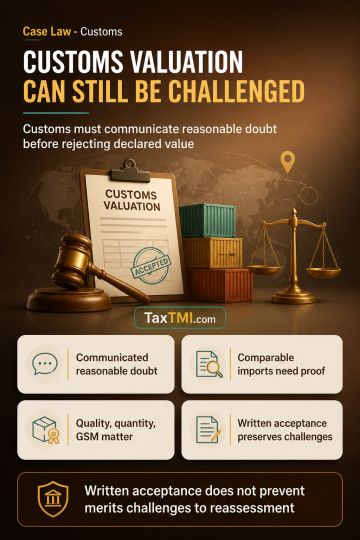
Customs transaction value rejection requires communicated reasonable doubt, while written reassessment acceptance preserves challenges to enhanced val...
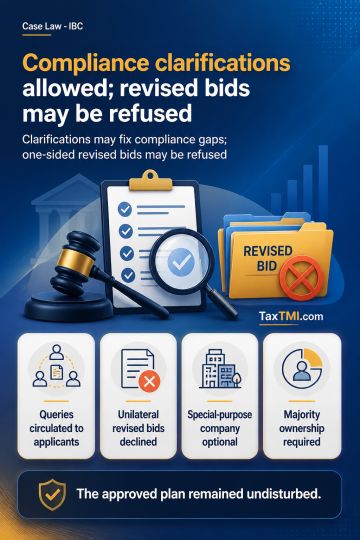
Challenge-mechanism compliance clarifications permitted, while unilateral revised resolution plans may be refused under creditors' commercial discreti...
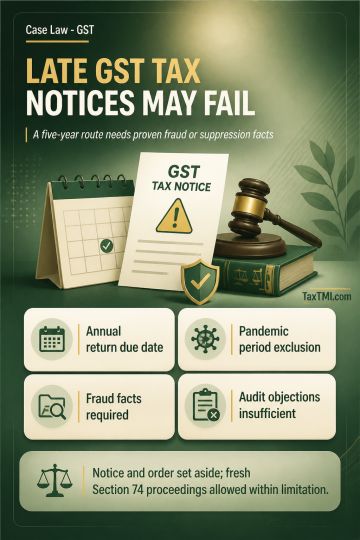
GST demand limitation under Section 73 runs from the due date for the annual return; extensions of those due dates change its commencement, and pandemic-period exclusion must be applied when calculating the three-year period. A notice issued after the resulting deadline cannot be sustained under the ordinary limitation. Recourse to Section 74's five-year period requires the Assessing Officer's satisfaction, based on disclosed foundational facts, that fraud, wilful misstatement or suppression caused the tax shortfall or excess input tax credit. Audit objections and bare statutory assertions are insufficient. The show-cause notice and consequential order were set aside, with liberty for fresh Section 74 proceedings within the applicable extended limitation.
GST demand limitation under Section 73 runs from the due date for the annual return; extensions of those due dates change its commencement, and pandemic-period exclusion must be applied when calculating the three-year period. A notice issued after the resulting deadline cannot be sustained under the ordinary limitation. Recourse to Section 74's five-year period requires the Assessing Officer's satisfaction, based on disclosed foundational facts, that fraud, wilful misstatement or suppression caused the tax shortfall or excess input tax credit. Audit objections and bare statutory assertions are insufficient. The show-cause notice and consequential order were set aside, with liberty for fresh Section 74 proceedings within the applicable extended limitation.
Note: It is a system-generated summary and is for quick reference only.
 TaxTMI
  TaxTMI
 of 4915