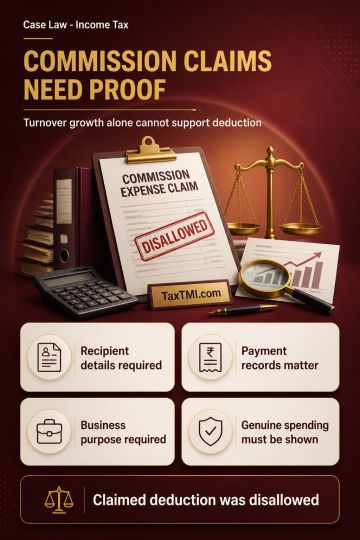
Business expenditure deduction requires proof of genuine commission payments and commercial allowability; turnover growth alone cannot validate the cl...
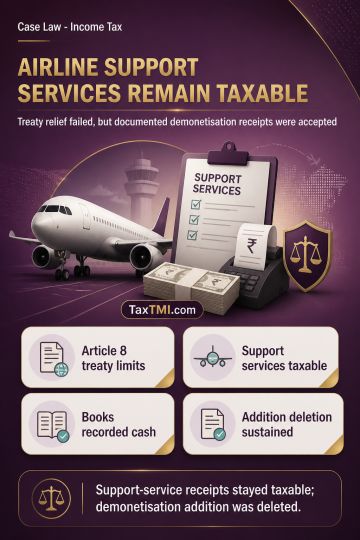
Article 8 treaty coverage excluded third-party airline support services, while documented demonetisation cash receipts remained accepted business inco...
Functional comparability under TNMM requires highway contract benchmarks to reflect operation, maintenance and transfer activities, requiring fresh be...
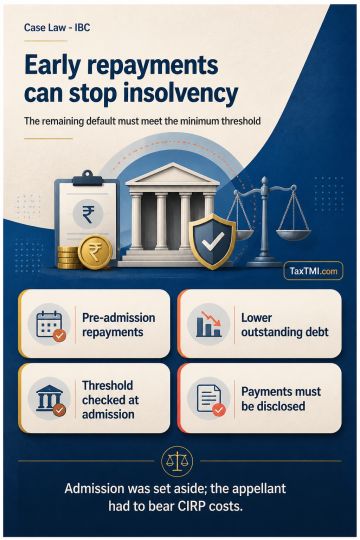
Corporate insolvency admission requires the outstanding default on the date of admission to meet the statutory minimum threshold. Part-payments made before admission reduce the debt in default for this purpose, and financial creditors must disclose those payments to the Adjudicating Authority. Where the remaining default falls below the threshold, admission of the insolvency application cannot be sustained. The admission was set aside because pre-admission repayments reduced the outstanding default below the applicable minimum, and CIRP costs were directed to be borne by the appellant.
Corporate insolvency admission requires the outstanding default on the date of admission to meet the statutory minimum threshold. Part-payments made before admission reduce the debt in default for this purpose, and financial creditors must disclose those payments to the Adjudicating Authority. Where the remaining default falls below the threshold, admission of the insolvency application cannot be sustained. The admission was set aside because pre-admission repayments reduced the outstanding default below the applicable minimum, and CIRP costs were directed to be borne by the appellant.
Note: It is a system-generated summary and is for quick reference only.
 TaxTMI
  TaxTMI
 of 4821










 Join Channel