Transaction value rejection requires reliable corroboration; refundable VAT is excluded and temporary registration does not defeat new-vehicle exempti...
Appellate jurisdiction remains available where a wrist-worn gold ornament cannot conclusively be characterised as imported baggage at the preliminary ...
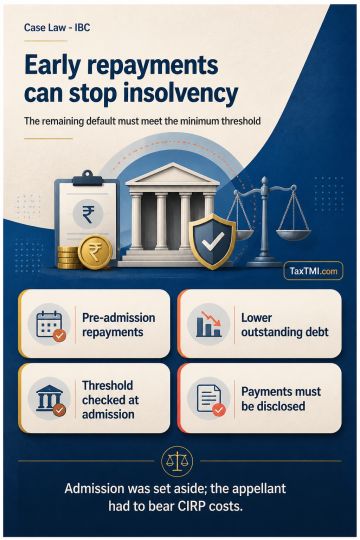
Corporate insolvency admission requires the outstanding default on the date of admission to meet the statutory minimum threshold. Part-payments made before admission reduce the debt in default for this purpose, and financial creditors must disclose those payments to the Adjudicating Authority. Where the remaining default falls below the threshold, admission of the insolvency application cannot be sustained. The admission was set aside because pre-admission repayments reduced the outstanding default below the applicable minimum, and CIRP costs were directed to be borne by the appellant.
Corporate insolvency admission requires the outstanding default on the date of admission to meet the statutory minimum threshold. Part-payments made before admission reduce the debt in default for this purpose, and financial creditors must disclose those payments to the Adjudicating Authority. Where the remaining default falls below the threshold, admission of the insolvency application cannot be sustained. The admission was set aside because pre-admission repayments reduced the outstanding default below the applicable minimum, and CIRP costs were directed to be borne by the appellant.
Note: It is a system-generated summary and is for quick reference only.
 TaxTMI
  TaxTMI
 of 4819







 Join Channel