Specialized Investment Fund distribution now requires dedicated certification, while transitional recognition preserves existing qualified distributor...
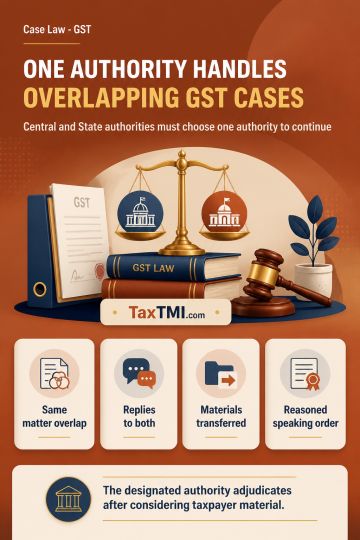
Overlapping GST proceedings require Central and State authorities to designate one competent authority for coordinated adjudication of the same matter...
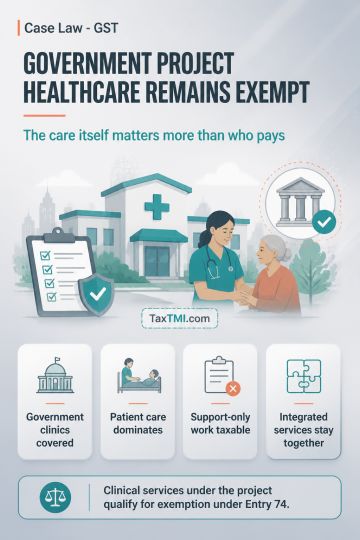
Composite healthcare supplies retain exemption when patient care is the contract's essential character, despite payment through an implementing agency...
Receipt of immovable property requires actual possession or enjoyment; redevelopment allotments exchanged for tenancy rights fall outside deemed incom...
Page of 4807
Press 'Enter' after typing page number.
1061 to 1080 of 96136 Results
❮
❯
❯❯
0 / 200
Expand Note
Add to Folder
No Folders have been created
+
Are you sure you want to delete "My most important" ?
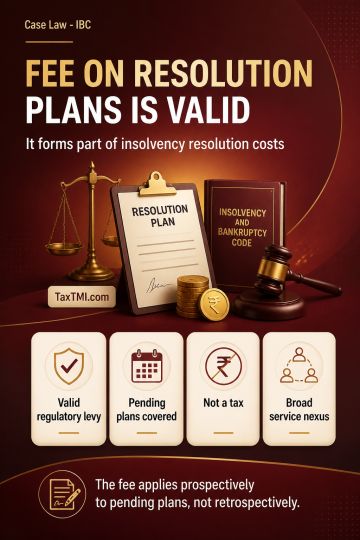
Regulation 31A authorises a regulatory fee on resolution plans as part of insolvency resolution process costs. The Insolvency and Bankruptcy Board's powers to levy fees and make regulations extend across the corporate insolvency resolution process and are not confined to service-provider registration or renewal. The residuary category of process costs may include the fee because the listed costs share no common genus limiting that power. The levy is a regulatory fee, not a tax: a broad nexus with regulatory services is sufficient and exact quid pro quo is unnecessary. It is neither arbitrary nor excessive merely because the regulator generates a surplus. The proviso applies prospectively to resolution plans pending adjudicatory approval and does not impose retrospective liability.
Regulation 31A authorises a regulatory fee on resolution plans as part of insolvency resolution process costs. The Insolvency and Bankruptcy Board's powers to levy fees and make regulations extend across the corporate insolvency resolution process and are not confined to service-provider registration or renewal. The residuary category of process costs may include the fee because the listed costs share no common genus limiting that power. The levy is a regulatory fee, not a tax: a broad nexus with regulatory services is sufficient and exact quid pro quo is unnecessary. It is neither arbitrary nor excessive merely because the regulator generates a surplus. The proviso applies prospectively to resolution plans pending adjudicatory approval and does not impose retrospective liability.
Note: It is a system-generated summary and is for quick reference only.
 TaxTMI
 of 4807











 Join Channel


 TaxTMI