Commercial vehicle depreciation, scientifically determined warranty provisions and exempt-income disallowances were resolved in favour of the taxpayer...
Inherited property sale proceeds require capital-gains treatment where ownership is supported by evidence, not suspicion or unverified signature doubt...
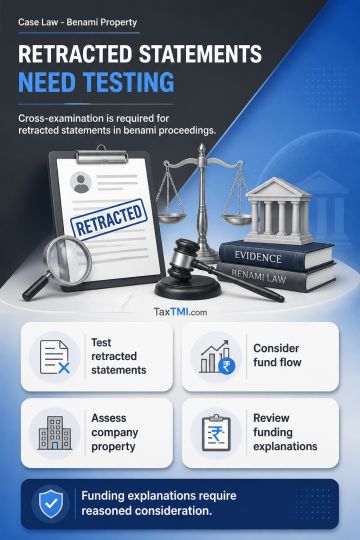
Cross-examination of retracted statements is essential where foundational evidence supports a benami allegation and documented funding explanations re...
Jurisdictional objections in reassessment, including a notice issued in the name of a deceased assessee and alleged procedural non-compliance, must be addressed before merits where they could invalidate the reassessment. Section 250(6) requires the appellate authority to identify each point for determination, record its decision and provide reasons; a general reference to the assessment order does not constitute ground-wise reasoned adjudication. The authority's power to set aside a best-judgment assessment does not remove this obligation. Jurisdictional and legal grounds should be decided through a speaking order before additions are examined on merits, which arise only if the reassessment is valid.
Jurisdictional objections in reassessment, including a notice issued in the name of a deceased assessee and alleged procedural non-compliance, must be addressed before merits where they could invalidate the reassessment. Section 250(6) requires the appellate authority to identify each point for determination, record its decision and provide reasons; a general reference to the assessment order does not constitute ground-wise reasoned adjudication. The authority's power to set aside a best-judgment assessment does not remove this obligation. Jurisdictional and legal grounds should be decided through a speaking order before additions are examined on merits, which arise only if the reassessment is valid.
Note: It is a system-generated summary and is for quick reference only.
 TaxTMI
 of 4803




















 Join Channel



 TaxTMI