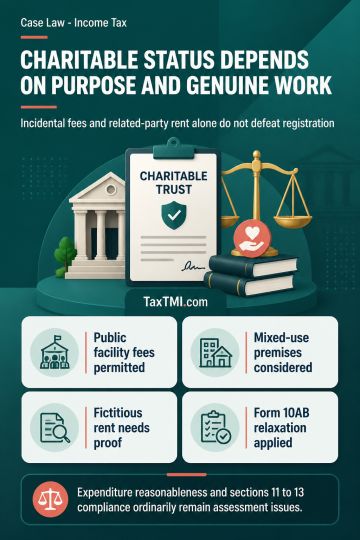
Charitable registration turns on predominant purpose and genuine activities, while incidental fees and related-party rent require supporting adverse m...
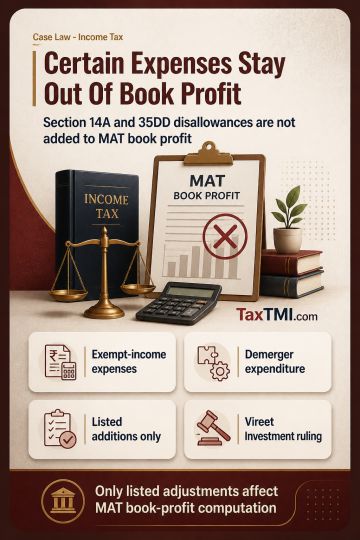
MAT book-profit adjustments exclude disallowances for exempt-income expenditure and demerger expenditure unless expressly listed under the statutory c...
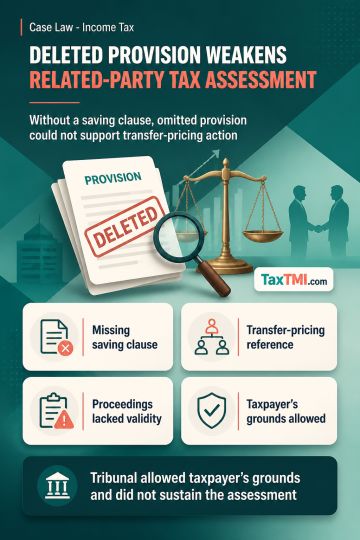
Omitted specified domestic transaction provision invalidates related-party expenditure transfer-pricing references and assessments based on consequent...
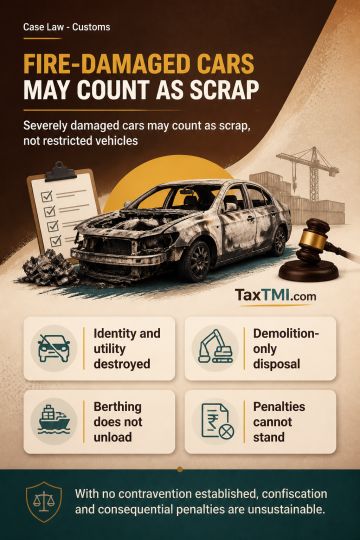
Fire-damaged motor cars brought with a vessel for ship-breaking may be classified as scrap where extensive damage has destroyed their identity and utility as motor vehicles, and salvage arrangements restrict disposal to demolition. Such goods are not restricted commercial or passenger vehicles, usable second-hand goods, or prohibited imports; confiscation for import without a licence is therefore not attracted. Unloading requires physical removal of cargo from a vessel; berthing at a notified ship-breaking port is not unloading. Where no unauthorised removal or other statutory contravention is established, neither the scrap cargo nor the vessel carrying it is liable to confiscation, and consequential penalties are unsustainable.
Fire-damaged motor cars brought with a vessel for ship-breaking may be classified as scrap where extensive damage has destroyed their identity and utility as motor vehicles, and salvage arrangements restrict disposal to demolition. Such goods are not restricted commercial or passenger vehicles, usable second-hand goods, or prohibited imports; confiscation for import without a licence is therefore not attracted. Unloading requires physical removal of cargo from a vessel; berthing at a notified ship-breaking port is not unloading. Where no unauthorised removal or other statutory contravention is established, neither the scrap cargo nor the vessel carrying it is liable to confiscation, and consequential penalties are unsustainable.
Note: It is a system-generated summary and is for quick reference only.
 TaxTMI
 of 4801



 Join Channel


 TaxTMI