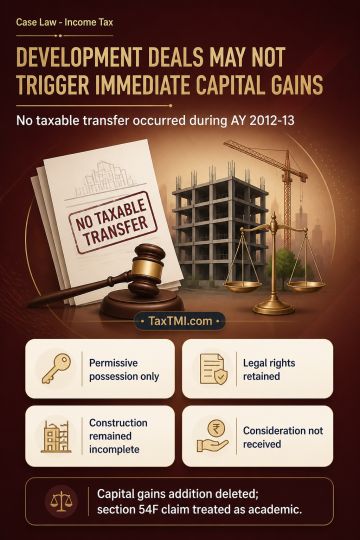
Development agreements require legal possession or effective enjoyment for capital gains transfer; permissive possession and deferred consideration de...
Prolonged sterilisation of development rights supports capital-gains treatment, while business-income disallowances cannot govern capital-gains comput...
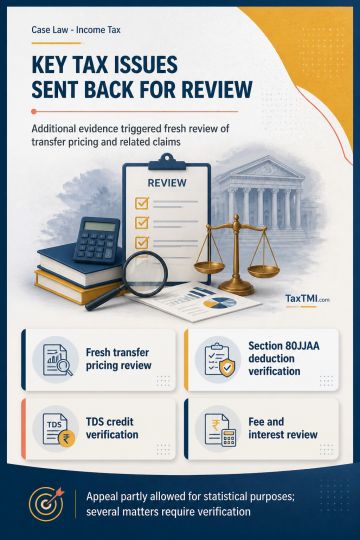
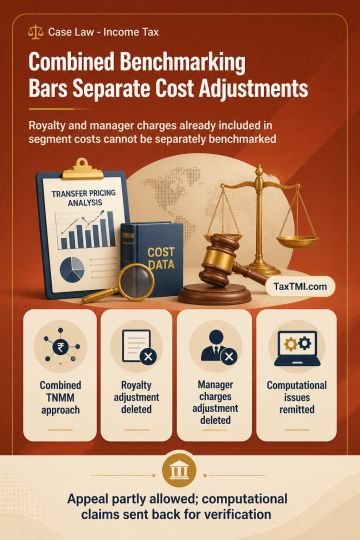
Additional evidence in transfer pricing dispute leads to fresh examination, while tax deductions, TDS credit, fee and refund interest require verifica...
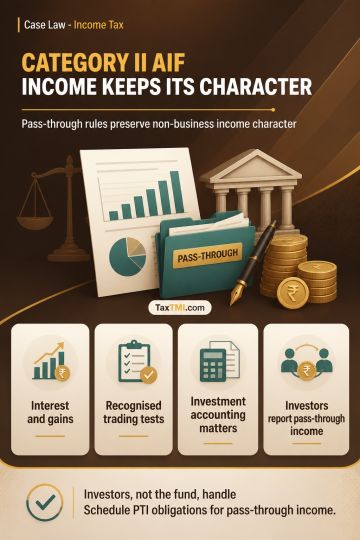
Category II AIF pass-through taxation preserves non-business income character; investment receipts cannot be reclassified without applying recognised ...
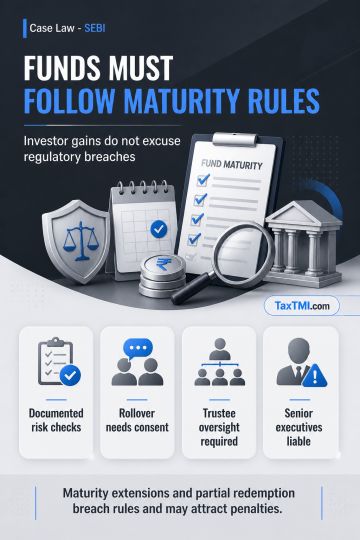
Mutual fund maturity rules require proper rollover, redemption, disclosure, and due diligence; investor gains cannot excuse regulatory breaches or pen...
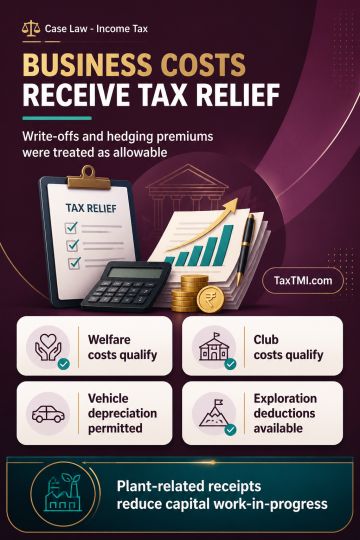
Employee-welfare payments to educational institutions and club expenditure were treated as business expenditure where incurred wholly and exclusively for business purposes. Enabling-facility costs were characterised as revenue expenditure because no capital asset was acquired. Receipts directly connected with setting up a plant were treated as capital receipts reducible from capital work-in-progress. Depreciation on business vehicles and temporary structures was allowed, while a challenge based on additional depreciation was treated as misconceived because the relief concerned consequential differential depreciation. Bad debts, advances and claims written off were allowable. Premium amortisation on foreign-exchange forward contracts used for hedging was non-speculative, not contingent or notional. Mineral-oil exploration and drilling survey expenditure qualified for deduction under the production-sharing contract framework.
Employee-welfare payments to educational institutions and club expenditure were treated as business expenditure where incurred wholly and exclusively for business purposes. Enabling-facility costs were characterised as revenue expenditure because no capital asset was acquired. Receipts directly connected with setting up a plant were treated as capital receipts reducible from capital work-in-progress. Depreciation on business vehicles and temporary structures was allowed, while a challenge based on additional depreciation was treated as misconceived because the relief concerned consequential differential depreciation. Bad debts, advances and claims written off were allowable. Premium amortisation on foreign-exchange forward contracts used for hedging was non-speculative, not contingent or notional. Mineral-oil exploration and drilling survey expenditure qualified for deduction under the production-sharing contract framework.
Note: It is a system-generated summary and is for quick reference only.
 TaxTMI
 of 4807











 Join Channel


 TaxTMI