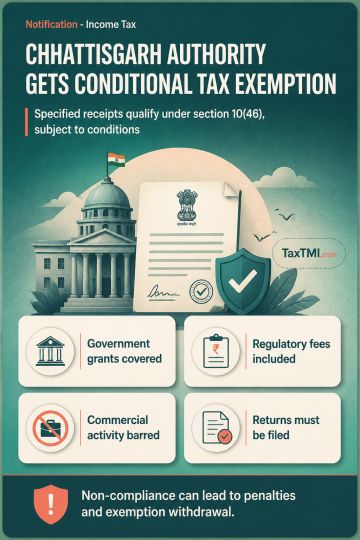
Specified regulatory authority income receives conditional tax exemption, subject to non-commercial activity, unchanged income character, and return f...
Tax exemption for regulatory authority income applies retrospectively, subject to non-commercial activity, unchanged income sources, and return-filing...
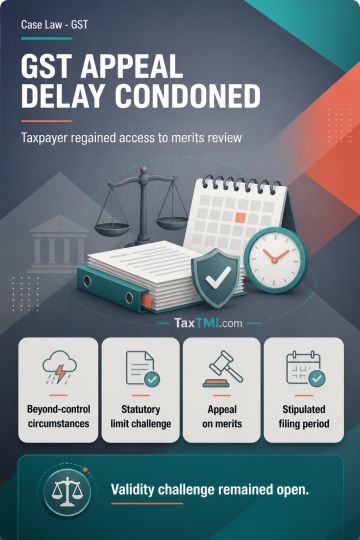
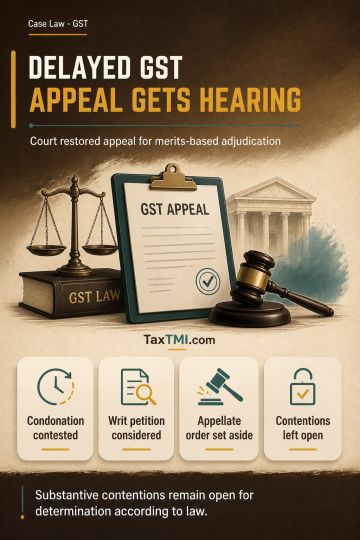
Input tax credit conditions remain constitutionally valid, with eligible recipient claims considered under GST circulars and retrospective filing dead...
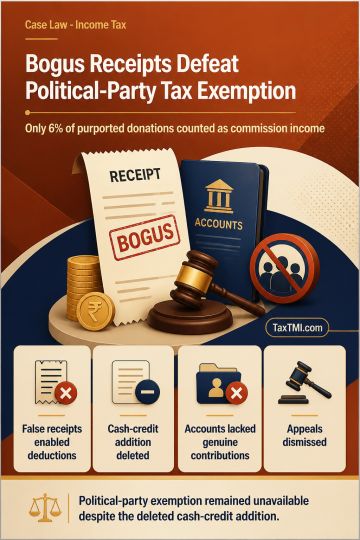
Bogus donation receipts justified commission income assessment and defeated political-party tax exemption for inaccurate accounts and reporting failur...
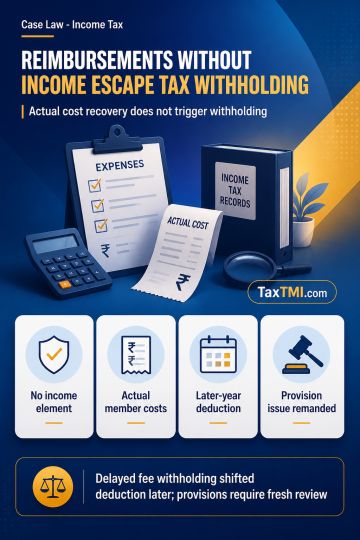
Pure reimbursement without income element escapes tax withholding, while delayed withholding and unsupported provisions face deferred or renewed scrut...
Public benefit requirement defeats charitable registration where residents' association services are reciprocal, member-only facilities governed by mu...
Employee-welfare payments to educational institutions and club expenditure were treated as business expenditure where incurred wholly and exclusively for business purposes. Enabling-facility costs were characterised as revenue expenditure because no capital asset was acquired. Receipts directly connected with setting up a plant were treated as capital receipts reducible from capital work-in-progress. Depreciation on business vehicles and temporary structures was allowed, while a challenge based on additional depreciation was treated as misconceived because the relief concerned consequential differential depreciation. Bad debts, advances and claims written off were allowable. Premium amortisation on foreign-exchange forward contracts used for hedging was non-speculative, not contingent or notional. Mineral-oil exploration and drilling survey expenditure qualified for deduction under the production-sharing contract framework.
Employee-welfare payments to educational institutions and club expenditure were treated as business expenditure where incurred wholly and exclusively for business purposes. Enabling-facility costs were characterised as revenue expenditure because no capital asset was acquired. Receipts directly connected with setting up a plant were treated as capital receipts reducible from capital work-in-progress. Depreciation on business vehicles and temporary structures was allowed, while a challenge based on additional depreciation was treated as misconceived because the relief concerned consequential differential depreciation. Bad debts, advances and claims written off were allowable. Premium amortisation on foreign-exchange forward contracts used for hedging was non-speculative, not contingent or notional. Mineral-oil exploration and drilling survey expenditure qualified for deduction under the production-sharing contract framework.
Note: It is a system-generated summary and is for quick reference only.
 TaxTMI
 of 4805













 Join Channel



 TaxTMI