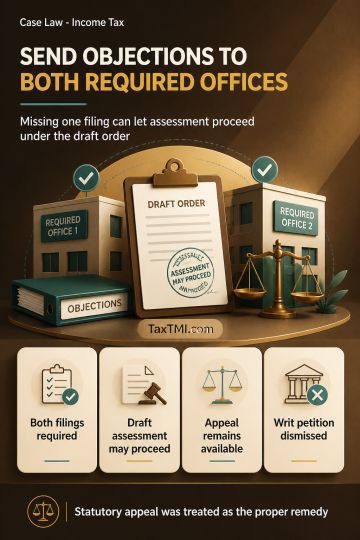
Dispute Resolution Panel objections must reach both prescribed forums; otherwise assessment may proceed and statutory appeal remains the proper remedy...
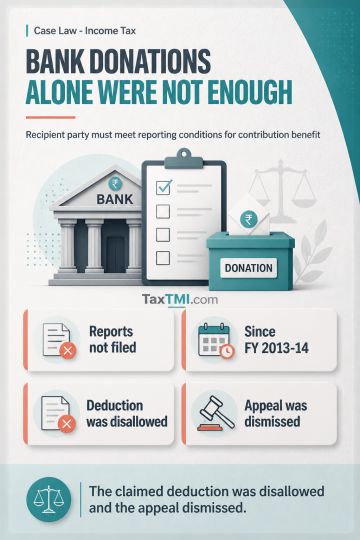
Political contribution deductions require recipient party compliance with contribution-reporting conditions; banking-channel donations alone do not qu...
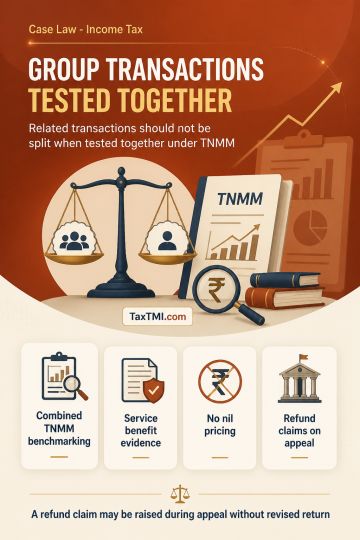
Aggregation under TNMM prevents selective testing of intra-group services without comparable uncontrolled transactions, while appellate additional cla...
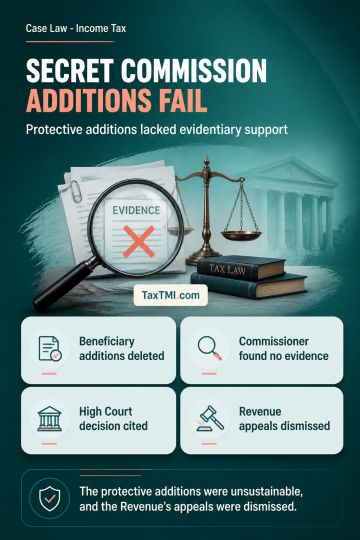
Protective assessment cannot duplicate identical receipts under competing characterisations; remote services did not establish a taxable permanent est...
Current account treatment of overseas tournament services removed most FEMA findings, but excess EEFC remittance and delayed repatriation remained bre...
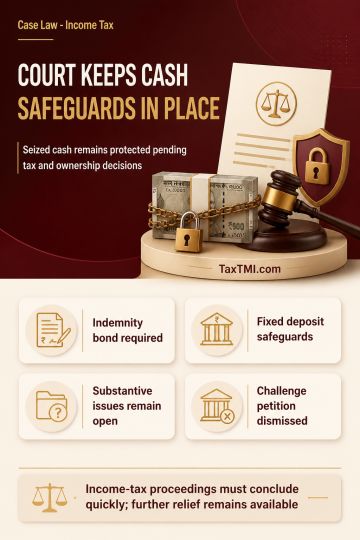
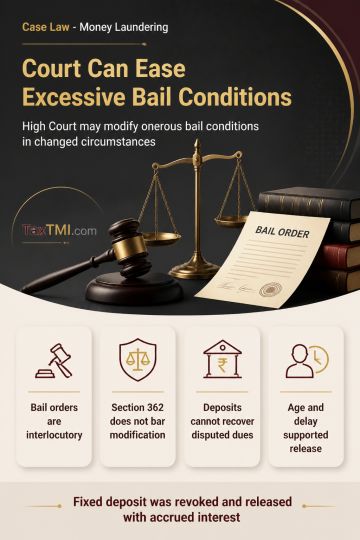
Modification of bail conditions remains available through inherent jurisdiction where onerous deposits undermine justice and cannot recover disputed d...
Employee-welfare payments to educational institutions and club expenditure were treated as business expenditure where incurred wholly and exclusively for business purposes. Enabling-facility costs were characterised as revenue expenditure because no capital asset was acquired. Receipts directly connected with setting up a plant were treated as capital receipts reducible from capital work-in-progress. Depreciation on business vehicles and temporary structures was allowed, while a challenge based on additional depreciation was treated as misconceived because the relief concerned consequential differential depreciation. Bad debts, advances and claims written off were allowable. Premium amortisation on foreign-exchange forward contracts used for hedging was non-speculative, not contingent or notional. Mineral-oil exploration and drilling survey expenditure qualified for deduction under the production-sharing contract framework.
Employee-welfare payments to educational institutions and club expenditure were treated as business expenditure where incurred wholly and exclusively for business purposes. Enabling-facility costs were characterised as revenue expenditure because no capital asset was acquired. Receipts directly connected with setting up a plant were treated as capital receipts reducible from capital work-in-progress. Depreciation on business vehicles and temporary structures was allowed, while a challenge based on additional depreciation was treated as misconceived because the relief concerned consequential differential depreciation. Bad debts, advances and claims written off were allowable. Premium amortisation on foreign-exchange forward contracts used for hedging was non-speculative, not contingent or notional. Mineral-oil exploration and drilling survey expenditure qualified for deduction under the production-sharing contract framework.
Note: It is a system-generated summary and is for quick reference only.
 TaxTMI
 of 4805










 Join Channel



 TaxTMI
