Mutual fund maturity rules require proper rollover, redemption, disclosure, and due diligence; investor gains cannot excuse regulatory breaches or pen...
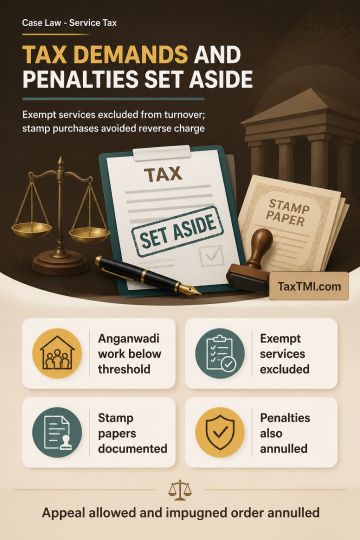
Threshold exemption excludes exempt services, while stamp-paper purchases avoid reverse charge; consequential service tax penalties were also set asid...
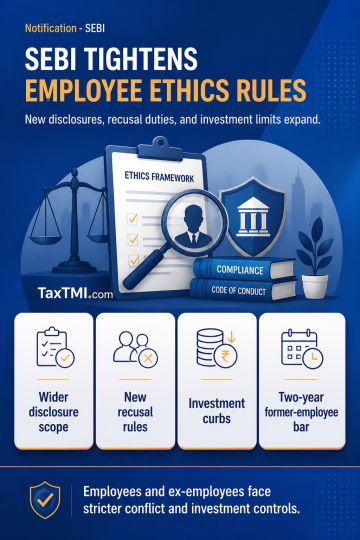
Employee conflict disclosures and investment restrictions expand with new recusal duties, post-employment limits, and compliance reporting requirement...
Corporate guarantees furnished by holding companies for...
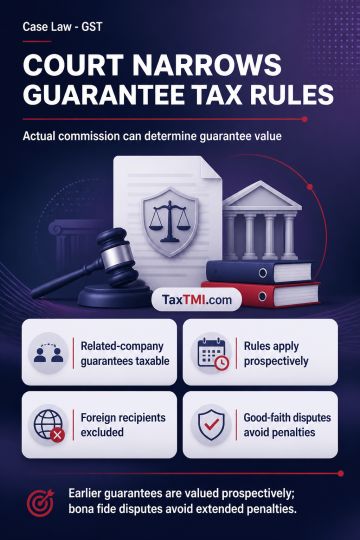
Corporate guarantee valuation permits actual ascertainable commission while barring retroactive application and extended-period penalties for bona fide disputes.
Contents
Summary
Note
Bookmark
Share
✓ Copied successfully !
Print
Print Options
For full text, please login
Login to TaxTMI
Verification Pending
The Email Id has not been verified. Click on the link we have sent on
Corporate guarantees furnished by holding companies for subsidiaries constitute taxable supplies of services between related persons, including where provided without consideration. A guarantee is not an actionable claim, and a share-pledge arrangement may also amount to a guarantee where its operative terms secure the subsidiary's obligations. Gratuitous guarantees are not continuous supplies, but annual accounting disclosure may determine yearly valuation based on outstanding guaranteed debt. Rule 28(2) remains valid, but the requirement to adopt the higher of deemed value and actual consideration is read down where an actual commission is ascertainable. The valuation rule cannot apply to guarantees executed before its introduction, although continuing guarantees remain taxable prospectively; guarantees for foreign recipients fall outside the rule. Extended-period proceedings and penalties require deliberate intent to evade tax, not a bona fide interpretive dispute.
Corporate guarantees furnished by holding companies for subsidiaries constitute taxable supplies of services between related persons, including where provided without consideration. A guarantee is not an actionable claim, and a share-pledge arrangement may also amount to a guarantee where its operative terms secure the subsidiary's obligations. Gratuitous guarantees are not continuous supplies, but annual accounting disclosure may determine yearly valuation based on outstanding guaranteed debt. Rule 28(2) remains valid, but the requirement to adopt the higher of deemed value and actual consideration is read down where an actual commission is ascertainable. The valuation rule cannot apply to guarantees executed before its introduction, although continuing guarantees remain taxable prospectively; guarantees for foreign recipients fall outside the rule. Extended-period proceedings and penalties require deliberate intent to evade tax, not a bona fide interpretive dispute.
Note: It is a system-generated summary and is for quick reference only.
 TaxTMI
 of 4805











 Join Channel


 TaxTMI