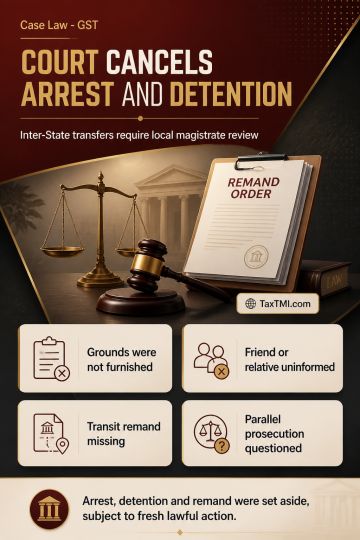
Arrest safeguards and transit remand requirements invalidated detention following inter-State transfer without communicated grounds or magistrate auth...
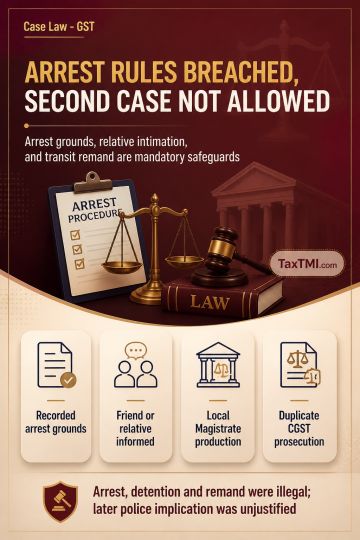
Arrest safeguards require disclosed grounds, relative intimation and transit remand, while duplicate prosecution under the CGST framework is unsustain...
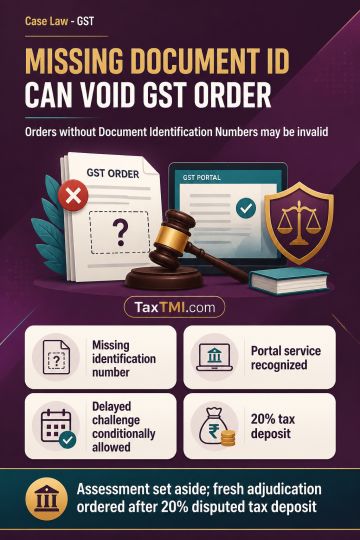
Document Identification Number defects can invalidate GST assessments, with delayed challenges entertained conditionally where patent irregularities e...
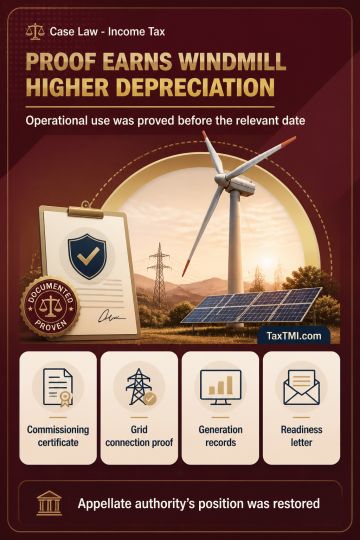
Windmill commissioning evidence supported higher depreciation where grid connection and electricity generation proved operational use before the relev...
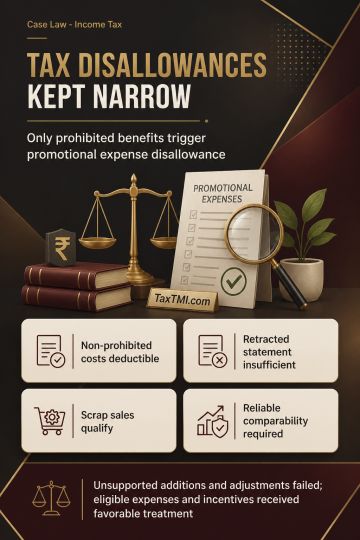
Pharmaceutical promotion and transfer-pricing comparability principles limited disallowances, while uncorroborated search allegations and unsupported ...
Registration of a partnership firm was proved by the Registrar...
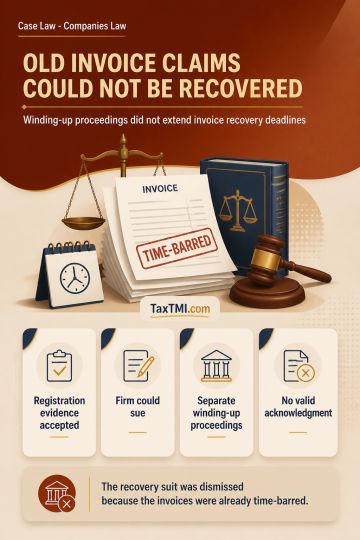
Invoice-based recovery claims remain time-barred despite separate winding-up proceedings, absent valid acknowledgment or part-payment of the disputed invoices.
Contents
Summary
Note
Bookmark
Share
✓ Copied successfully !
Print
Print Options
For full text, please login
Login to TaxTMI
Verification Pending
The Email Id has not been verified. Click on the link we have sent on
Registration of a partnership firm was proved by the Registrar of Firms' memorandum and a certified Form-VIII admitted as additional evidence because it enabled judgment and furthered justice. The firm was therefore competent to institute the suit. Limitation for invoice-based recovery was not extended or suspended by winding-up proceedings, which are independent of a civil money-recovery suit. The claim was based on individual invoices rather than a running account, and the relied-on communication neither acknowledged the disputed debt nor constituted part-payment for those invoices. As the relevant invoices were already time-barred, the recovery suit was dismissed.
Registration of a partnership firm was proved by the Registrar of Firms' memorandum and a certified Form-VIII admitted as additional evidence because it enabled judgment and furthered justice. The firm was therefore competent to institute the suit. Limitation for invoice-based recovery was not extended or suspended by winding-up proceedings, which are independent of a civil money-recovery suit. The claim was based on individual invoices rather than a running account, and the relied-on communication neither acknowledged the disputed debt nor constituted part-payment for those invoices. As the relevant invoices were already time-barred, the recovery suit was dismissed.
Note: It is a system-generated summary and is for quick reference only.
 TaxTMI
 of 4798



 Join Channel


 TaxTMI