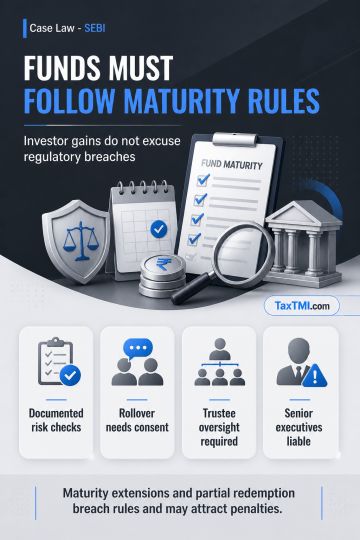
Mutual fund maturity rules require proper rollover, redemption, disclosure, and due diligence; investor gains cannot excuse regulatory breaches or pen...
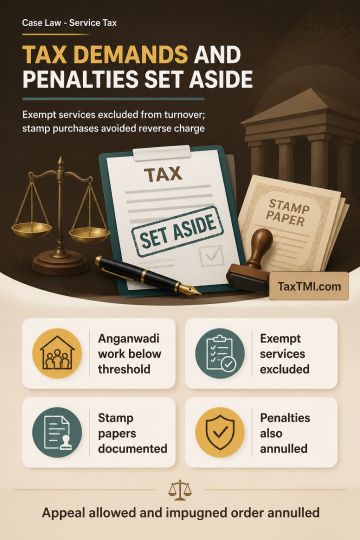
Threshold exemption excludes exempt services, while stamp-paper purchases avoid reverse charge; consequential service tax penalties were also set asid...
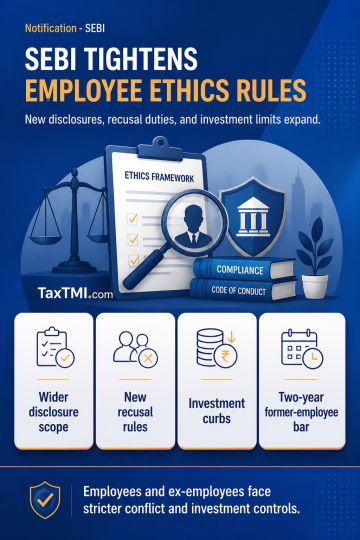
Employee conflict disclosures and investment restrictions expand with new recusal duties, post-employment limits, and compliance reporting requirement...
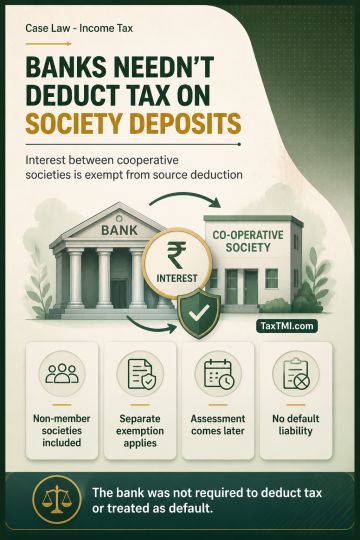
Interest paid by a co-operative bank to another co-operative society, including a non-member depositor society, falls within the inter-co-operative-society exemption from tax deduction at source. The exclusion of co-operative banks from the member-payment limb does not extend to the separate limb covering payments between co-operative societies; a co-operative bank retains its character as a co-operative society. The recipient society's eligibility for deduction of its income is determined at assessment stage and does not govern the payer's independent transactional withholding obligation. Accordingly, the co-operative bank was not required to deduct tax on such interest and could not be treated as an assessee in default.
Interest paid by a co-operative bank to another co-operative society, including a non-member depositor society, falls within the inter-co-operative-society exemption from tax deduction at source. The exclusion of co-operative banks from the member-payment limb does not extend to the separate limb covering payments between co-operative societies; a co-operative bank retains its character as a co-operative society. The recipient society's eligibility for deduction of its income is determined at assessment stage and does not govern the payer's independent transactional withholding obligation. Accordingly, the co-operative bank was not required to deduct tax on such interest and could not be treated as an assessee in default.
Note: It is a system-generated summary and is for quick reference only.
 TaxTMI
 of 4801




 Join Channel


 TaxTMI
