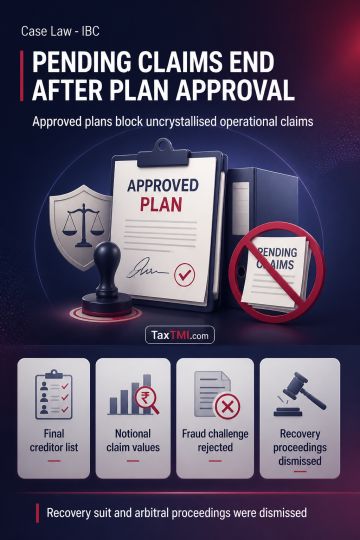
Clean slate principle extinguishes uncrystallised operational claims and bars continuation of pending recovery and arbitral proceedings after plan app...
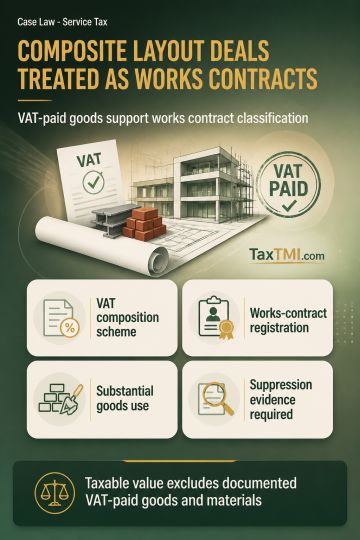
Works contract classification governs composite layout-development contracts where VAT-paid goods are transferred alongside construction and infrastru...
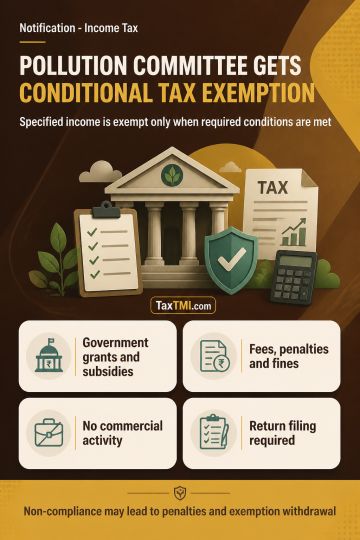
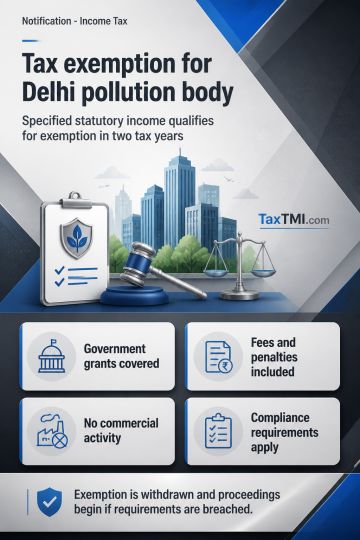
Specified income tax exemption for pollution control body remains conditional on non-commercial activity, unchanged income character, and return filin...
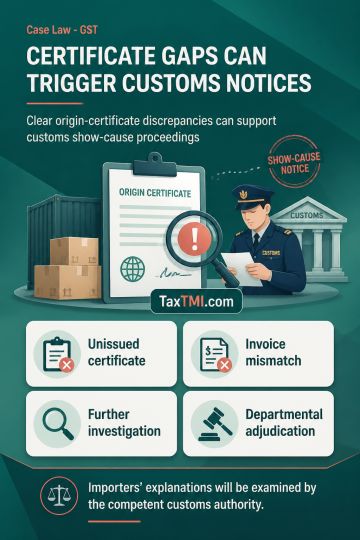
Jurisdictional facts in certificate-of-origin discrepancies can support customs show-cause proceedings, leaving factual explanations for departmental ...
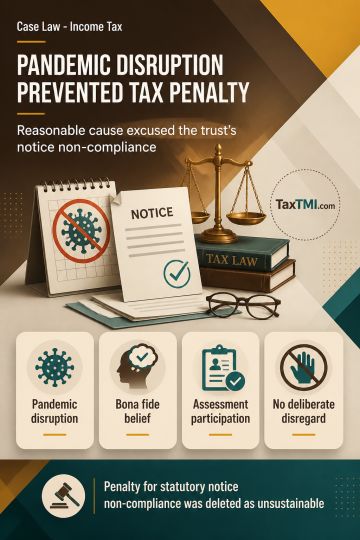
Pandemic-related disruption, a plausible bona fide belief about return-filing obligations, and subsequent participation in assessment proceedings are identified as reasonable cause for non-compliance with statutory notices by an educational trust. The note states that mere non-compliance, without independent material showing deliberate or wilful disregard, does not justify penalty. It further describes penalty provisions as quasi-criminal and inapplicable to technical or venial defaults where surrounding circumstances establish reasonable cause. On these grounds, the penalty for non-compliance with statutory notices was described as unsustainable and deleted.
Pandemic-related disruption, a plausible bona fide belief about return-filing obligations, and subsequent participation in assessment proceedings are identified as reasonable cause for non-compliance with statutory notices by an educational trust. The note states that mere non-compliance, without independent material showing deliberate or wilful disregard, does not justify penalty. It further describes penalty provisions as quasi-criminal and inapplicable to technical or venial defaults where surrounding circumstances establish reasonable cause. On these grounds, the penalty for non-compliance with statutory notices was described as unsustainable and deleted.
Note: It is a system-generated summary and is for quick reference only.
 TaxTMI
 of 4790




 Join Channel


 TaxTMI