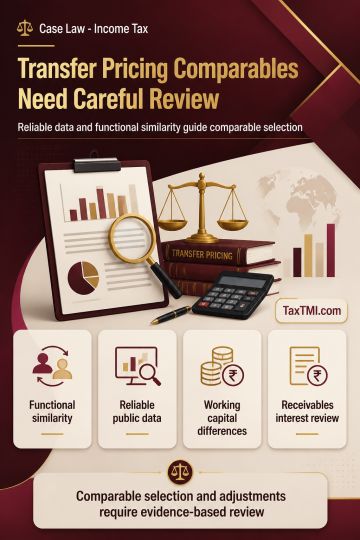
Transfer pricing comparability requires functional alignment, reliable financial data, and careful review of working capital and receivables adjustmen...
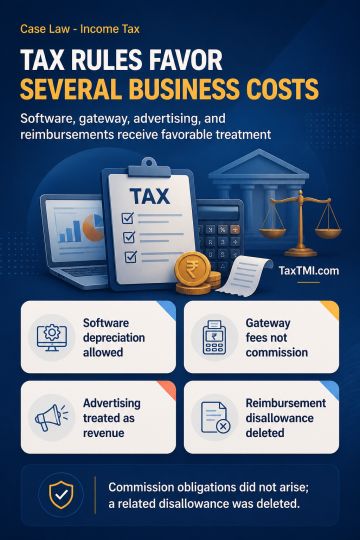
Transfer pricing rules require benchmarking corporate guarantees and associated-enterprise advances, while invalid domestic-transaction adjustments ca...
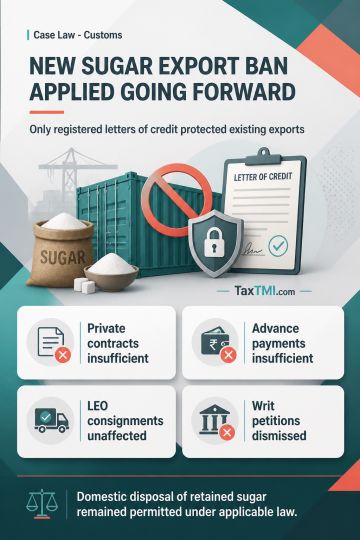
Prospective sugar export prohibition required registered letters of credit; private contracts and export quotas created no enforceable continuation ri...
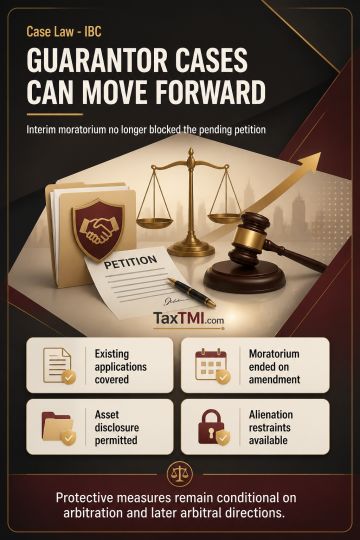
Retroactive interim-moratorium exclusion permits protective asset disclosure and preservation measures against personal guarantors pending arbitration...
Page of 4778
Press 'Enter' after typing page number.
61 to 80 of 95557 Results
❮
❯
❯❯
0 / 200
Expand Note
Add to Folder
No Folders have been created
+
Are you sure you want to delete "My most important" ?
For dishonour of a cheque drawn on a company account, the company must be arraigned as an accused before vicarious liability can attach to an authorised signatory or other persons responsible for its business. Omission of the company is a foundational defect that prevents valid cognizance under the Negotiable Instruments Act. Section 319 CrPC cannot be used to cure that defect by subsequently impleading the company after the statutory limitation period; any fresh complaint remains subject to limitation and delayed cognizance requires sufficient cause. The Supreme Court quashed the complaint and consequential proceedings, and held that the direction to suo motu arraign the company exceeded jurisdiction.
For dishonour of a cheque drawn on a company account, the company must be arraigned as an accused before vicarious liability can attach to an authorised signatory or other persons responsible for its business. Omission of the company is a foundational defect that prevents valid cognizance under the Negotiable Instruments Act. Section 319 CrPC cannot be used to cure that defect by subsequently impleading the company after the statutory limitation period; any fresh complaint remains subject to limitation and delayed cognizance requires sufficient cause. The Supreme Court quashed the complaint and consequential proceedings, and held that the direction to suo motu arraign the company exceeded jurisdiction.
Note: It is a system-generated summary and is for quick reference only.
 TaxTMI
 of 4778













 Join Channel



 TaxTMI