Cooperative society deposits, member-interest TDS exemption and credit-facility deduction claims require verification through records and supporting e...
Customs jurisdiction over EPCG condition breaches survives export-obligation discharge certificates, requiring alleged fraud and misdeclaration to be ...
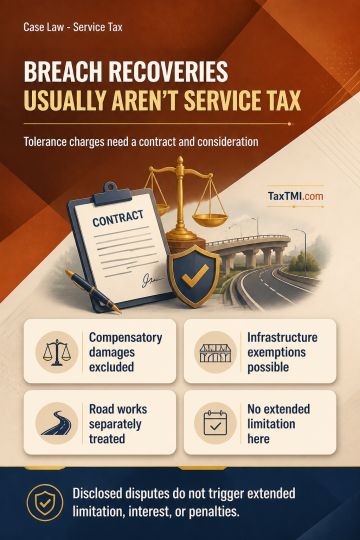
Contractual tolerance requires consideration; breach recoveries, qualifying public infrastructure services and road works escape service tax liability...
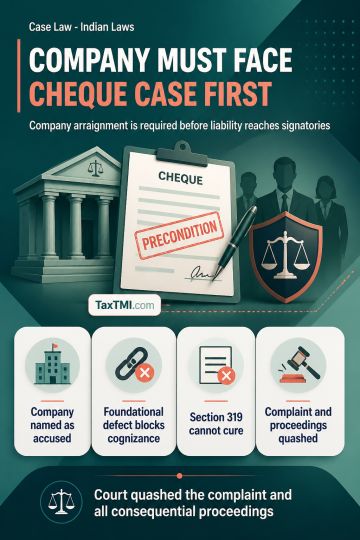
For dishonour of a cheque drawn on a company account, the company must be arraigned as an accused before vicarious liability can attach to an authorised signatory or other persons responsible for its business. Omission of the company is a foundational defect that prevents valid cognizance under the Negotiable Instruments Act. Section 319 CrPC cannot be used to cure that defect by subsequently impleading the company after the statutory limitation period; any fresh complaint remains subject to limitation and delayed cognizance requires sufficient cause. The Supreme Court quashed the complaint and consequential proceedings, and held that the direction to suo motu arraign the company exceeded jurisdiction.
For dishonour of a cheque drawn on a company account, the company must be arraigned as an accused before vicarious liability can attach to an authorised signatory or other persons responsible for its business. Omission of the company is a foundational defect that prevents valid cognizance under the Negotiable Instruments Act. Section 319 CrPC cannot be used to cure that defect by subsequently impleading the company after the statutory limitation period; any fresh complaint remains subject to limitation and delayed cognizance requires sufficient cause. The Supreme Court quashed the complaint and consequential proceedings, and held that the direction to suo motu arraign the company exceeded jurisdiction.
Note: It is a system-generated summary and is for quick reference only.
 TaxTMI
 of 4786


















 Join Channel


 TaxTMI