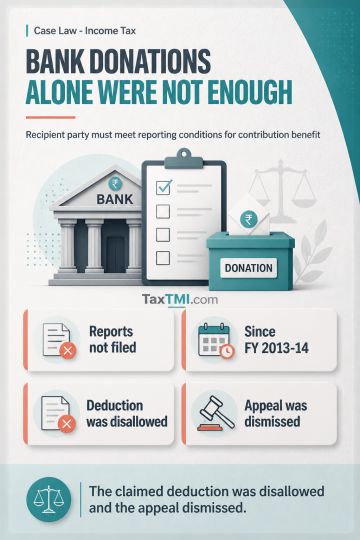
Political contribution deductions require recipient party compliance with contribution-reporting conditions; banking-channel donations alone do not qu...
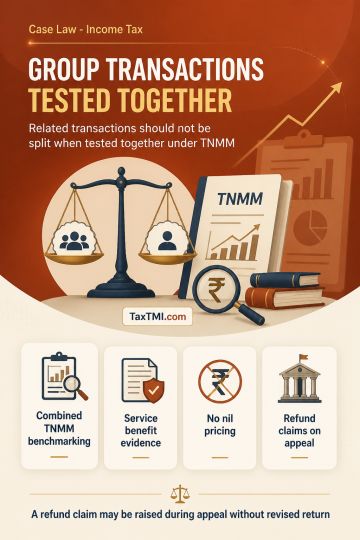
Aggregation under TNMM prevents selective testing of intra-group services without comparable uncontrolled transactions, while appellate additional cla...
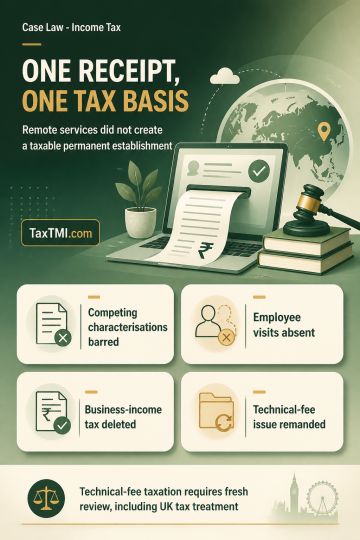
Protective assessment cannot duplicate identical receipts under competing characterisations; remote services did not establish a taxable permanent est...
Current account treatment of overseas tournament services removed most FEMA findings, but excess EEFC remittance and delayed repatriation remained bre...
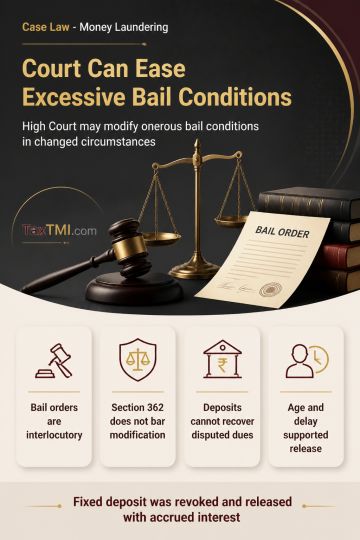
Modification of bail conditions remains available through inherent jurisdiction where onerous deposits undermine justice and cannot recover disputed d...
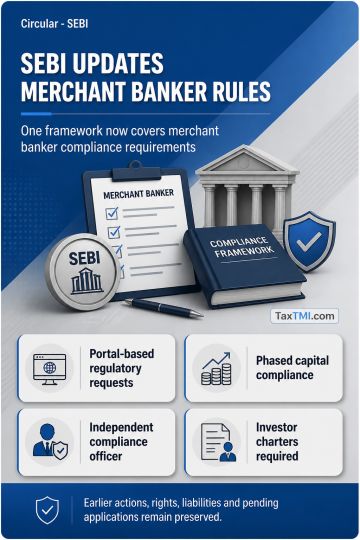
Merchant banker regulation consolidates registration, governance, capital, reporting, outsourcing and investor-protection requirements under an update...
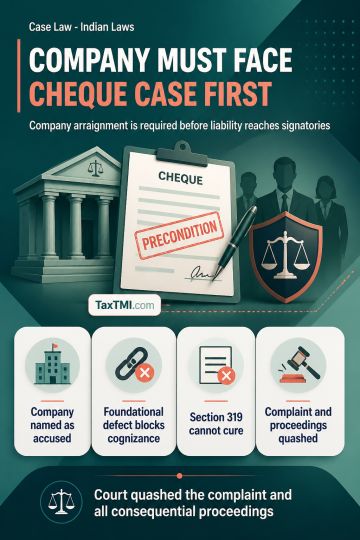
For dishonour of a cheque drawn on a company account, the company must be arraigned as an accused before vicarious liability can attach to an authorised signatory or other persons responsible for its business. Omission of the company is a foundational defect that prevents valid cognizance under the Negotiable Instruments Act. Section 319 CrPC cannot be used to cure that defect by subsequently impleading the company after the statutory limitation period; any fresh complaint remains subject to limitation and delayed cognizance requires sufficient cause. The Supreme Court quashed the complaint and consequential proceedings, and held that the direction to suo motu arraign the company exceeded jurisdiction.
For dishonour of a cheque drawn on a company account, the company must be arraigned as an accused before vicarious liability can attach to an authorised signatory or other persons responsible for its business. Omission of the company is a foundational defect that prevents valid cognizance under the Negotiable Instruments Act. Section 319 CrPC cannot be used to cure that defect by subsequently impleading the company after the statutory limitation period; any fresh complaint remains subject to limitation and delayed cognizance requires sufficient cause. The Supreme Court quashed the complaint and consequential proceedings, and held that the direction to suo motu arraign the company exceeded jurisdiction.
Note: It is a system-generated summary and is for quick reference only.
 TaxTMI
 of 4782










 Join Channel


 TaxTMI