Composite inpatient healthcare supply may retain exemption despite MRP medicine billing, while separate taxable sale characterisation remains disputed...
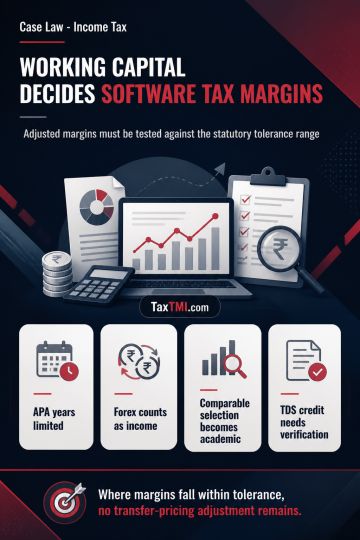
Working-capital adjustment determines whether software-services transfer-pricing margins fall within the statutory tolerance range, eliminating any ad...
Permanent establishment deductions upheld for expatriate salaries, direct costs and trading losses, while head-office costs require fresh classificati...
Data transmission equipment classification under CTSH 8517 62 remains distinct from residual classification, with exemption evidence requiring scrutin...
Page of 4788
Press 'Enter' after typing page number.
721 to 740 of 95749 Results
❮
❯
❯❯
0 / 200
Expand Note
Add to Folder
No Folders have been created
+
Are you sure you want to delete "My most important" ?
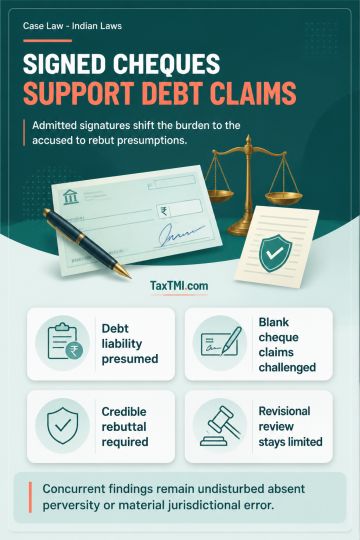
Admitted cheque signatures trigger presumptions of consideration and discharge of a legally enforceable debt or liability under the Negotiable Instruments Act. The notes explain that an accused alleging misuse of a blank security cheque must rebut those presumptions with credible material; unsupported assertions, delayed demands for return of the cheque, and unsubstantiated challenges to the complainant's financial capacity may be insufficient. They further state that revisional jurisdiction is supervisory, not appellate: concurrent findings should not be reversed through fresh reappreciation of evidence unless perversity, material error, failure to consider relevant evidence, or miscarriage of justice is shown.
Admitted cheque signatures trigger presumptions of consideration and discharge of a legally enforceable debt or liability under the Negotiable Instruments Act. The notes explain that an accused alleging misuse of a blank security cheque must rebut those presumptions with credible material; unsupported assertions, delayed demands for return of the cheque, and unsubstantiated challenges to the complainant's financial capacity may be insufficient. They further state that revisional jurisdiction is supervisory, not appellate: concurrent findings should not be reversed through fresh reappreciation of evidence unless perversity, material error, failure to consider relevant evidence, or miscarriage of justice is shown.
Note: It is a system-generated summary and is for quick reference only.
 TaxTMI
 of 4788

















 Join Channel


 TaxTMI