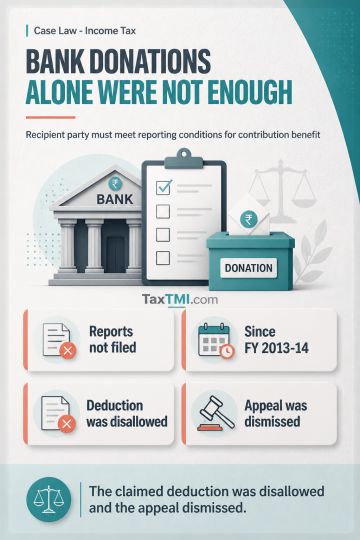
Political contribution deductions require recipient party compliance with contribution-reporting conditions; banking-channel donations alone do not qu...
Aggregation under TNMM prevents selective testing of intra-group services without comparable uncontrolled transactions, while appellate additional cla...
Protective assessment cannot duplicate identical receipts under competing characterisations; remote services did not establish a taxable permanent est...
Current account treatment of overseas tournament services removed most FEMA findings, but excess EEFC remittance and delayed repatriation remained bre...
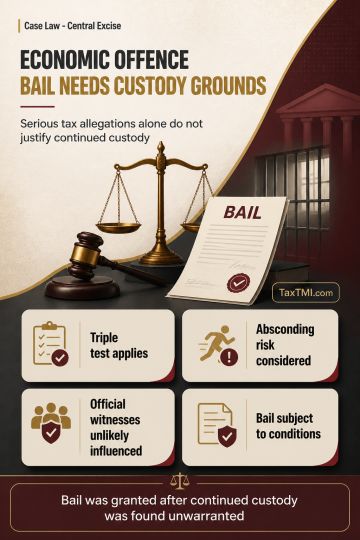
Modification of bail conditions remains available through inherent jurisdiction where onerous deposits undermine justice and cannot recover disputed d...
Merchant banker regulation consolidates registration, governance, capital, reporting, outsourcing and investor-protection requirements under an update...
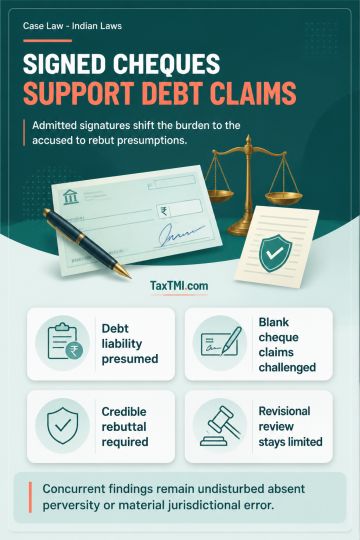
Admitted cheque signatures trigger presumptions of consideration and discharge of a legally enforceable debt or liability under the Negotiable Instruments Act. The notes explain that an accused alleging misuse of a blank security cheque must rebut those presumptions with credible material; unsupported assertions, delayed demands for return of the cheque, and unsubstantiated challenges to the complainant's financial capacity may be insufficient. They further state that revisional jurisdiction is supervisory, not appellate: concurrent findings should not be reversed through fresh reappreciation of evidence unless perversity, material error, failure to consider relevant evidence, or miscarriage of justice is shown.
Admitted cheque signatures trigger presumptions of consideration and discharge of a legally enforceable debt or liability under the Negotiable Instruments Act. The notes explain that an accused alleging misuse of a blank security cheque must rebut those presumptions with credible material; unsupported assertions, delayed demands for return of the cheque, and unsubstantiated challenges to the complainant's financial capacity may be insufficient. They further state that revisional jurisdiction is supervisory, not appellate: concurrent findings should not be reversed through fresh reappreciation of evidence unless perversity, material error, failure to consider relevant evidence, or miscarriage of justice is shown.
Note: It is a system-generated summary and is for quick reference only.
 TaxTMI
 of 4782



















 Join Channel


 TaxTMI