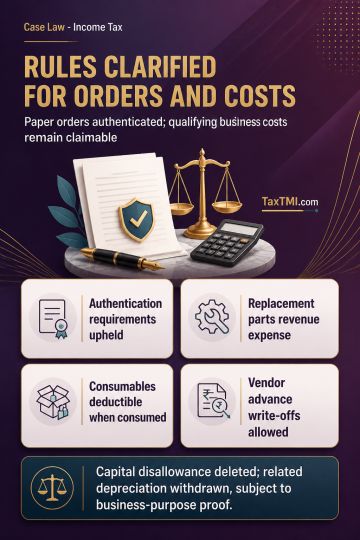
Authentication of paper assessment orders upheld, while qualifying repairs, consumables and vendor advance write-offs remain deductible business claim...
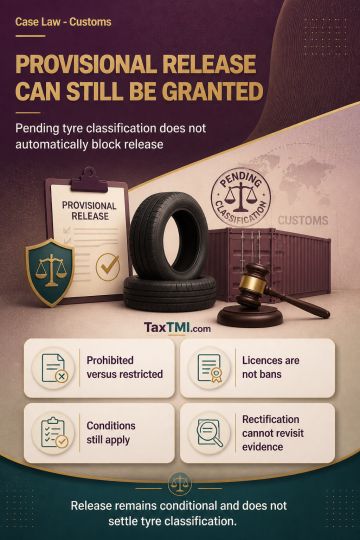
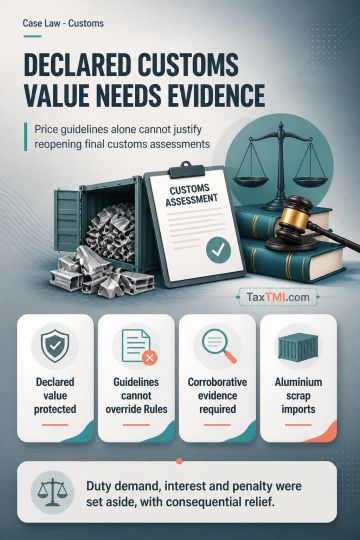
Transaction value cannot be rejected solely on non-statutory valuation guidelines without corroborative evidence supporting reassessment of final cust...
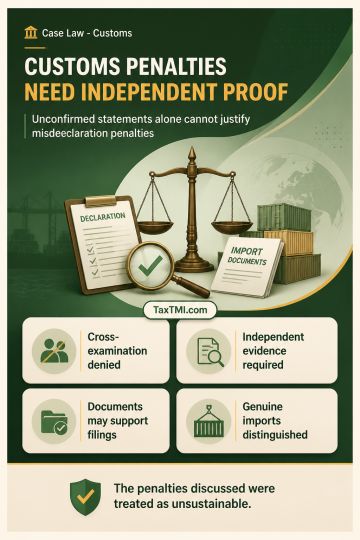
Cross-examination rights and corroborated evidence limit customs penalties for misdeclaration in genuine import transactions involving documented clea...
Page of 4780
Press 'Enter' after typing page number.
261 to 280 of 95596 Results
❮
❯
❯❯
0 / 200
Expand Note
Add to Folder
No Folders have been created
+
Are you sure you want to delete "My most important" ?
Foreign-currency remittances for overseas tournament services...
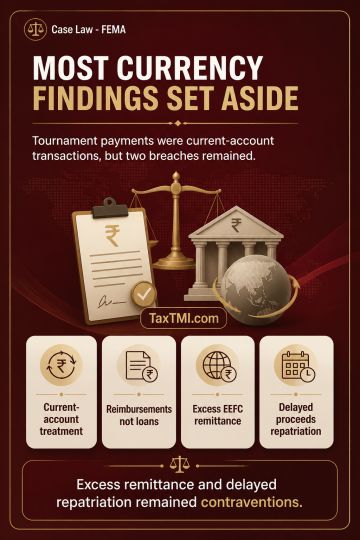
Current account treatment of overseas tournament services removed most FEMA findings, but excess EEFC remittance and delayed repatriation remained breaches.
Contents
Summary
Note
Bookmark
Share
✓ Copied successfully !
Print
Print Options
For full text, please login
Login to TaxTMI
Verification Pending
The Email Id has not been verified. Click on the link we have sent on
Foreign-currency remittances for overseas tournament services were treated as current account transactions because they did not alter assets, liabilities or contingent liabilities; related findings concerning the dedicated foreign-currency account, service-expense reimbursements, pouring-rights revenue, EEFC credits and authorised dealer liability were set aside. Reimbursements to the service provider were not borrowing or lending absent a loan arrangement or interest. EEFC-account drawals generally did not require prior approval, but remittances exceeding the recorded contractual liability constituted a contravention. Delayed repatriation of ticket-sale proceeds also constituted a contravention, while liability of office-bearers depended on whether they were in charge of the organisation's affairs. The natural-justice objection failed because hearing and cross-examination opportunities were provided.
Foreign-currency remittances for overseas tournament services were treated as current account transactions because they did not alter assets, liabilities or contingent liabilities; related findings concerning the dedicated foreign-currency account, service-expense reimbursements, pouring-rights revenue, EEFC credits and authorised dealer liability were set aside. Reimbursements to the service provider were not borrowing or lending absent a loan arrangement or interest. EEFC-account drawals generally did not require prior approval, but remittances exceeding the recorded contractual liability constituted a contravention. Delayed repatriation of ticket-sale proceeds also constituted a contravention, while liability of office-bearers depended on whether they were in charge of the organisation's affairs. The natural-justice objection failed because hearing and cross-examination opportunities were provided.
Note: It is a system-generated summary and is for quick reference only.
 TaxTMI
 of 4780









 Join Channel


 TaxTMI