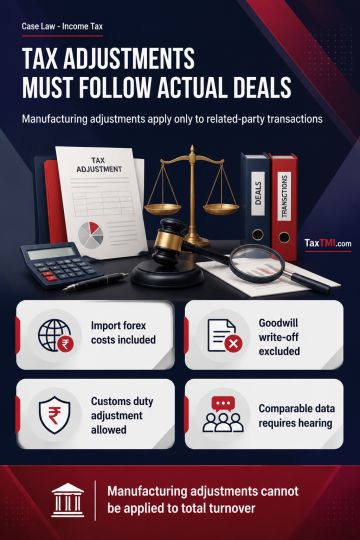
International transaction benchmarking restricts transfer pricing adjustments to associated-enterprise dealings, while functional comparability govern...
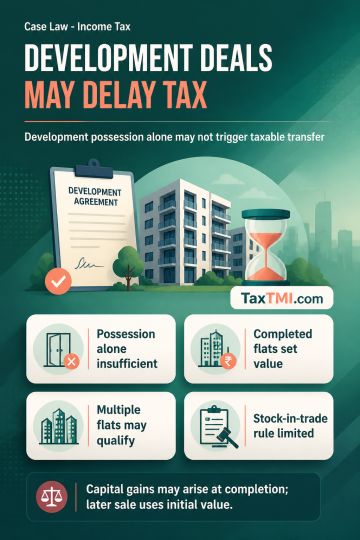
Joint development agreements defer taxable transfer where possession lacks part performance, while completed flats determine consideration and exempti...
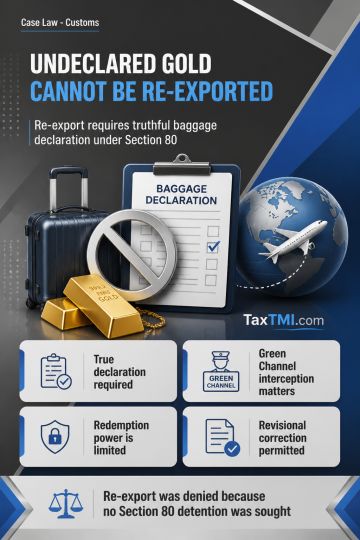
Passenger baggage re-export requires true declaration and cannot be granted indirectly through discretionary redemption of undeclared prohibited goods...
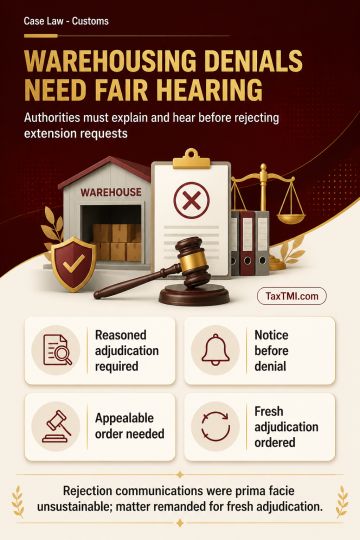
Extension or rejection of the warehousing period under the sufficient-cause standard is quasi-judicial, requiring a judicial approach and an opportunity of hearing. The notes state that a denial must follow adjudicatory proceedings and be communicated through an appealable, reasoned order. Communications that merely convey rejection without findings or justification do not satisfy principles of natural justice. The Supreme Court's COVID-19 limitation extension is also noted. On the stated facts, the rejection communications were considered prima facie unsustainable; the matter was remanded for fresh adjudication after disclosure of proposed reasons, opportunity to reply and personal hearing, while consequential proceedings remained in abeyance.
Extension or rejection of the warehousing period under the sufficient-cause standard is quasi-judicial, requiring a judicial approach and an opportunity of hearing. The notes state that a denial must follow adjudicatory proceedings and be communicated through an appealable, reasoned order. Communications that merely convey rejection without findings or justification do not satisfy principles of natural justice. The Supreme Court's COVID-19 limitation extension is also noted. On the stated facts, the rejection communications were considered prima facie unsustainable; the matter was remanded for fresh adjudication after disclosure of proposed reasons, opportunity to reply and personal hearing, while consequential proceedings remained in abeyance.
Note: It is a system-generated summary and is for quick reference only.
 TaxTMI
 of 4782












 Join Channel


 TaxTMI
