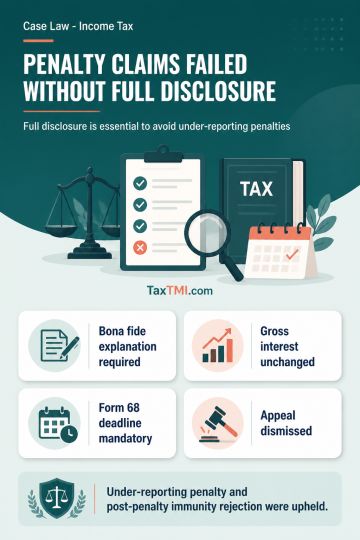
Bona fide disclosure requirements govern under-reporting penalties, and post-penalty immunity applications cannot secure available statutory protectio...
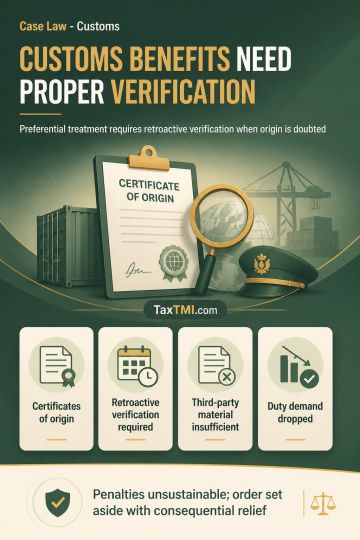
Certificate-of-origin verification procedure governs preferential customs benefits; denial without retroactive verification was set aside with consequ...
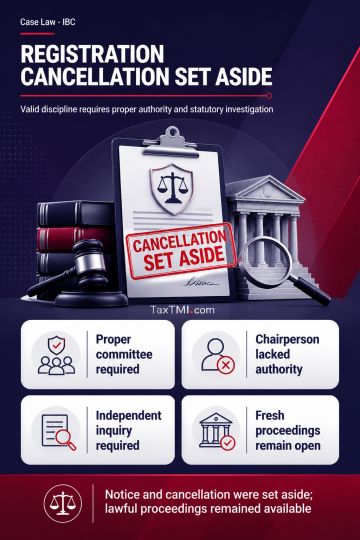
Disciplinary Committee jurisdiction and mandatory investigation requirements invalidated cancellation of an insolvency professional's registration and...
Retention of seized property survives where recorded reasons support proceeds of crime, while stayed investigation periods are excluded from limitatio...
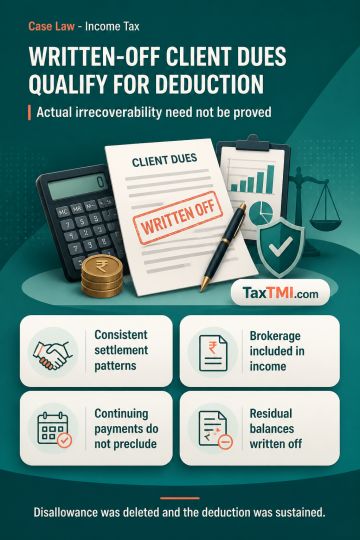
Bad-debt deduction for share-broking client dues may be claimed where outstanding client balances are treated as irrecoverable and written off in the accounts. Under amended section 36(1)(vii), actual irrecoverability need not be established. Continuing transactions or payments by clients do not preclude the claim where the broker follows a consistent settlement pattern under which clients pay agreed amounts and residual balances are written off. Client receivables qualify as debts when brokerage included in those receivables has been taken into account in computing income. The disallowance of the written-off client dues was deleted and the deduction sustained.
Bad-debt deduction for share-broking client dues may be claimed where outstanding client balances are treated as irrecoverable and written off in the accounts. Under amended section 36(1)(vii), actual irrecoverability need not be established. Continuing transactions or payments by clients do not preclude the claim where the broker follows a consistent settlement pattern under which clients pay agreed amounts and residual balances are written off. Client receivables qualify as debts when brokerage included in those receivables has been taken into account in computing income. The disallowance of the written-off client dues was deleted and the deduction sustained.
Note: It is a system-generated summary and is for quick reference only.
 TaxTMI
 of 4792










 Join Channel


 TaxTMI
